 Skip to content





Silver spent most of the past decade playing second fiddle to gold. Then, 2025 changed that perception decisively. Silver prices in Indian markets surged over 160% in 2025, taking prices to more than 2.6 times their 2024 year-end level.
Looked at in isolation, the move feels extraordinary. And it was. But silver’s long-term record tells a more uneven story. Since January 2010, silver’s compounded average growth rate works out to roughly 10%. Strip out the 2025 spike, however, and the CAGR up to 2024 drops sharply to 3.7%. This highlights silver’s defining trait: long stretches of indifference punctuated by sharp rallies.
The 2025 experience wasn’t just another commodity spike. It revealed fundamental shifts in silver’s supply-demand dynamics that merit closer examination. More importantly, it demonstrated that having the right access infrastructure matters as much as identifying the opportunity. While no one can predict the next move for silver, understanding what happened in 2025 and how to position yourself for similar opportunities is valuable.
Decoding the 2025 Rally
Several factors converged to create silver’s extraordinary performance in 2025, and understanding each element helps separate structural drivers from temporary catalysts.
Industrial Demand Provides Momentum
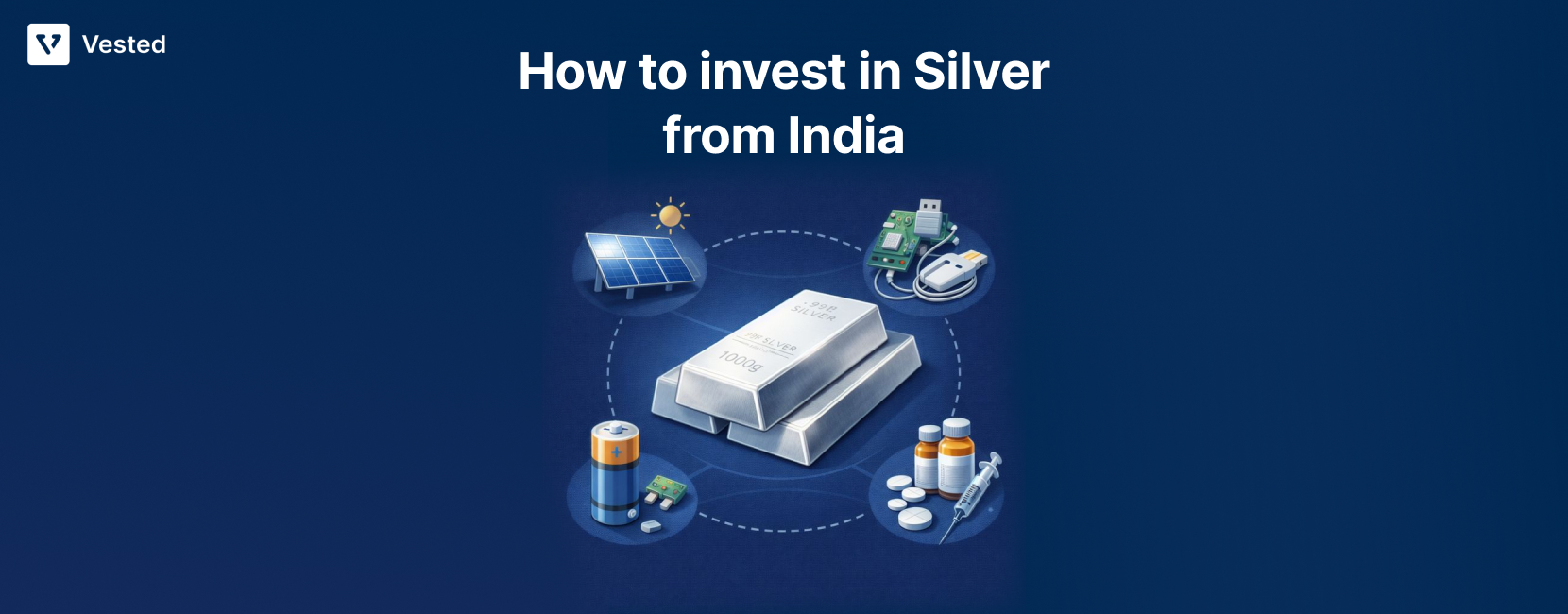
Silver’s role in green energy technologies and its positioning as a critical industrial metal supported sustained demand throughout 2025. Solar photovoltaics, electric vehicles, and data centers all increased their silver consumption. The solar sector alone consumes roughly 20 grams of silver per panel, and newer technologies like TOPCon cells require up to 50% more silver than traditional PERC panels.
Electric vehicles use 25-50 grams of silver per vehicle—two to three times more than traditional combustion engine vehicles. With global EV production continuing to expand and EVs representing 18-20% of new car sales in major markets, automotive sector silver demand is multiplying rapidly.
However, industrial demand is cyclical and sensitive to economic slowdowns. While it provided a strong foundation for 2025’s rally, this component can reverse quickly if manufacturing activity weakens or if technologies emerge that reduce per-unit silver consumption.
Supply Responded Slowly
Much of silver production is a byproduct of copper, lead, and zinc mining—roughly 72% of total mined silver comes this way. This creates a structural constraint: even when silver prices surge, supply cannot adjust quickly because extraction rates depend on demand for other base metals, not silver itself.
New mining projects take 8-12 years to develop. Ore grades are declining globally. These supply constraints amplified 2025’s rally, but they also introduce a risk: when demand eventually eases, the delayed supply response can intensify declines if production finally catches up just as demand softens.
Understanding Silver’s Volatility Profile
Silver’s 160% gain in 2025 tells only part of the story. The journey included multiple corrections exceeding 10% and sharp intraday swings that tested investor conviction. This volatility stems from silver’s smaller market size compared to gold—roughly one-tenth by value—meaning equivalent dollar inflows create proportionally larger price movements.
Silver’s dual nature as both industrial commodity and precious metal creates conflicting price pressures. During economic expansion, industrial demand supports prices. During recessions, industrial demand weakens even as safe-haven buying increases. The net effect depends on which force dominates, creating unpredictable short-term movements.
Over extended periods, silver demonstrates this pattern consistently: long stretches of sideways or declining prices interrupted by explosive rallies. The 3.7% CAGR from 2010-2024 represents fifteen years of largely disappointing performance. The 160% gain in 2025 occurred in just twelve months. For investors, this creates a challenging dynamic—you need conviction to hold through the quiet periods to capture the eventual rally.
How to Access Silver: The ETF Solution
Spotting a rally is one thing. Acting on it is another. Physical silver comes with storage challenges, purity concerns, and resale friction, especially at scale. That operational hassle alone keeps many investors on the sidelines.
This is where silver ETFs become compelling. A silver ETF functions similarly to a mutual fund that buys physical silver and issues units against those holdings, which can be traded on stock exchanges. Each unit represents a proportional claim on the fund’s silver assets.
For most investors, transactions happen entirely on the exchange. You buy units through your broker and sell them the same way, just like stocks. The appeal is straightforward: silver ETFs remove the operational hassle of owning silver while preserving complete price exposure, making them the cleanest route for investors who want silver in their portfolio without dealing with the metal itself.
Is the ETF Market Liquid Enough?
Ease of access alone doesn’t make an ETF investable. Liquidity determines whether you can enter and exit at prices close to the metal’s true value. To gauge how easy it is to trade silver ETFs, examining the ratio of average daily traded value to assets under management (AUM) provides useful insight.
While AUM shows how much money is currently invested in silver ETFs, traded value indicates how easily that money can be moved out, especially during volatile phases. The ratio reveals that trading activity in Indian silver ETFs is reasonably high, with the six-month average daily traded value typically ranging between 0.7% to 0.9% of AUM.
Activity picked up further in the latter half of 2025 and rose to ₹1,083 crore in daily trading, equivalent to about 2.2% of the category’s AUM (based on November-end AUM). This improved liquidity made 2025’s rally more accessible to Indian retail investors than previous silver moves.
However, the silver ETF category in India remains relatively young and considerably smaller compared to gold ETFs. The total AUM for silver ETFs in India is significantly lower than their gold counterparts, which means the market depth isn’t as robust. During periods of heavy buying or selling, this smaller pool can lead to wider bid-ask spreads and greater price impact from large transactions.
Moreover, the flow dynamics aren’t yet optimal. While 2025 saw improved investor participation, the infrastructure for silver ETFs in India is still maturing. This brings distinct considerations around liquidity variation across different funds and potential tracking challenges during extreme volatility—concerns that are less pronounced in more established markets.
Accessing Global Silver Markets Through Vested
For Indian investors looking beyond domestic options, platforms like Vested provide direct access to U.S.-listed silver investment products. The U.S. silver market offers several advantages worth considering.
Why Consider U.S. Markets?
Superior liquidity stands out immediately. Trading volumes in U.S. silver markets significantly exceed domestic Indian markets, meaning you can execute larger transactions without impacting prices or widening spreads. This difference is substantial—U.S. silver ETFs have AUM measured in billions of dollars with deep, liquid markets that can absorb large orders efficiently.
In contrast, India’s silver ETF market, while growing, operates at a much smaller scale. The total AUM across all Indian silver ETFs remains modest, and the flow dynamics are still developing. This means larger investors or those making significant allocations can face liquidity constraints in domestic markets that simply don’t exist in U.S. markets.
Pricing efficiency matters too. Global silver prices are primarily discovered in international markets, and U.S. products track these prices with minimal friction. During 2025’s volatile conditions, this efficiency proved valuable—some domestic ETFs experienced temporary tracking gaps that well-established U.S. products largely avoided.
The market depth in U.S. silver products also means tighter bid-ask spreads even during volatile periods. When silver experienced sharp intraday movements during late 2025, U.S. ETFs maintained spreads of just a few basis points, while some domestic products saw spreads widen more noticeably due to their smaller trading volumes.
Most importantly, you gain currency diversification. When you invest in U.S.-listed silver products, you’re getting exposure to both silver and the U.S. dollar—a dual benefit that can be valuable during rupee depreciation.
Consider the math: if silver prices remain flat in dollar terms but the rupee depreciates 5% against the dollar, your dollar-denominated silver investment still delivers a 5% return in rupee terms. Given the rupee’s long-term depreciation trend against the dollar, this dual exposure has historically provided an additional return layer. In 2025, when the rupee weakened substantially against the dollar while silver itself rallied, Indian investors in U.S. silver products captured both movements.
Types of Silver Investment Products
Through Vested’s curated Silver ETF collection, investors can access various approaches to silver exposure:
Physical Silver ETFs track actual silver stored in vaults, with shares representing fractional ownership. These funds typically have expense ratios under 0.5% annually and move in lockstep with silver prices. They offer pure exposure without company-specific risks—when silver rises 10%, your ETF should deliver approximately 10% returns minus small expense ratio costs.
Silver Mining Stocks and Funds offer a different proposition—leveraged exposure to silver prices. When silver prices rise, mining company profits can rise faster because many costs remain relatively fixed. A 20% increase in silver prices might translate to 30-40% increases in mining profits, depending on cost structures.
However, this leverage cuts both ways during downturns. Mining stocks also carry company-specific risks including operational challenges, management quality issues, geological uncertainties, and regulatory hurdles that pure silver exposure doesn’t have. During corrections, mining stocks typically fall harder than the metal itself.
Hybrid Products combine these approaches, holding both physical silver and mining stocks, attempting to capture silver’s stability with mining operations’ growth potential.
Rather than recommending specific products, Vested maintains a curated collection of silver-related investment options. You can explore this collection to understand different approaches—physical silver tracking, mining exposure, or hybrid strategies—and choose what aligns with your investment philosophy and risk appetite.
How to Choose Silver Investment Products
Whether investing through domestic ETFs or U.S. products via Vested, several evaluation criteria matter:
Prioritize Liquidity
Prefer products with consistently higher traded value and narrower bid-ask spreads. As a rule of thumb, daily traded value should be at least 50 times your intended investment size. This ensures you can enter and exit positions without significantly impacting the price you receive.
This consideration becomes particularly important in India’s silver ETF market, where the overall AUM and trading volumes are considerably lower than gold ETFs or U.S. silver products. During 2025’s volatile periods, liquidity differences between products became apparent. Well-traded ETFs maintained tight spreads even during sharp price movements, while less liquid alternatives saw spreads widen to 1-2%, effectively increasing transaction costs.
For investors making substantial allocations (₹10 lakhs or more), the liquidity constraints in domestic silver ETFs can become meaningful. U.S. markets, with their significantly larger AUM and trading volumes, can absorb such orders with minimal market impact—a practical advantage that extends beyond theoretical considerations.
Evaluate Cost and Tracking Together
A low expense ratio helps, but tracking error—how closely the ETF follows actual silver prices—deserves equal attention. An ETF that trades well but tracks poorly, or one that tracks well but trades thinly, both create problems.
Expense ratios, cash balances held by the fund, transaction costs for buying and storing silver, and the mechanics of sourcing physical metal all contribute to tracking differences. During normal markets, tracking error might be negligible. During volatile periods like late 2025, some ETFs temporarily diverged from silver prices by 1-2% before converging again.
Balance Metrics, Don’t Optimize One
Seek products that perform adequately across multiple dimensions rather than excelling in one area while failing in others. A balanced profile—reasonable liquidity, acceptable tracking, competitive costs—typically serves investors better than extreme optimization of any single metric.
Keep in mind that these characteristics evolve as the silver ETF market matures. Products that showed weaker liquidity in 2024 improved significantly during 2025’s rally as investor interest surged. Conversely, future market conditions might reveal different patterns.
The Tax Mathematics: What You Keep Matters
Understanding taxation is crucial for calculating actual returns. Following India’s Budget 2024, the taxation landscape changed significantly, and these rules apply as of early 2026.
For U.S.-Listed Silver ETFs:
U.S.-listed silver ETFs are treated as foreign unlisted securities from an Indian tax perspective. If held for more than 24 months, long-term capital gains are taxed at 12.5% without indexation benefits—down from the previous 20% rate.
While the lower headline rate is attractive, the removal of indexation means you cannot adjust the purchase price for inflation. For investors who held through 2025’s rally and sell in 2026, this works favorably since inflation was modest relative to silver’s price appreciation. However, in scenarios where silver moves slowly over many years, the lack of indexation could result in higher effective tax rates.
For holding periods under 24 months, gains are classified as short-term capital gains and taxed at your applicable income tax slab rate. If you’re in the 30% bracket, short-term gains face 30% tax plus applicable surcharge and cess.
Currency Conversion and Compliance:
All gains must be converted to Indian rupees using the SBI Telegraphic Transfer buying rate as of the last day of the month prior to the transaction. This is the official exchange rate used for tax calculations.
You must report holdings in your income tax return under Schedule FA (Foreign Assets), with capital gains under Schedule FSI (Foreign Source Income). Under the Liberalized Remittance Scheme, you can remit up to $250,000 per financial year for overseas investments—more than sufficient for most individual investors.
The compliance requirements aren’t particularly burdensome, but they’re important. You need to maintain records of purchase dates, purchase prices in U.S. dollars, sale prices, and exchange rates used. Most platforms like Vested provide detailed transaction statements that simplify this process, but the responsibility for accurate reporting lies with you.
Comparing with Domestic Options:
Indian silver ETFs held for more than 12 months face 12.5% LTCG tax without indexation, with short-term gains (under 12 months) taxed at slab rates. The holding period threshold is shorter (12 months versus 24 months for U.S. products)—a meaningful difference if you anticipate shorter holding periods.
However, you miss the dollar exposure benefit that proved valuable during 2025. The choice between domestic and U.S. products depends on your view of currency movements, your intended holding period, and whether you value the liquidity and diversification benefits of global markets.
Physical silver carries similar tax treatment—12.5% LTCG without indexation for holdings beyond 24 months—but you bear the costs of storage, bid-ask spreads when selling, and potential purity concerns. During 2025’s rally, physical silver holders also faced practical challenges finding buyers for large quantities at fair prices during peak volatility.
Key Risks to Understand
Even with 2025’s rally validating silver’s appeal, distinct risks remain:
Liquidity Remains Uneven
While liquidity improved dramatically during 2025, particularly in domestic Indian ETFs that saw increased investor participation, it’s not uniform across all products. The Indian silver ETF market still operates at a smaller scale compared to gold ETFs, with lower overall AUM and less optimal flow dynamics.
This structural limitation means that liquidity can vary significantly across different funds. Some products may have reasonable daily trading volumes during normal market conditions but face challenges during extreme volatility when investors most need to act quickly. Lower trading volumes in certain ETFs can widen bid-ask spreads from a few basis points to 1-2% during stressed conditions, materially increasing your effective cost of entry and exit.
For context, U.S. silver ETFs with multi-billion dollar AUM and deep institutional participation typically maintain tight spreads even during volatile periods. The Indian market, while growing, hasn’t yet achieved this level of market depth. This isn’t necessarily a dealbreaker for smaller investors making modest allocations, but it’s a practical consideration for anyone investing significant amounts or those who value the ability to execute large transactions efficiently.
Tracking Is Not Frictionless
Expense ratios, cash balances, transaction costs, and the mechanics of sourcing and storing physical silver can all cause ETF returns to diverge from spot silver prices. Tracking error captures this cumulative gap and deserves as much attention as headline costs.
Industrial Demand Is Cyclical
Silver’s industrial applications provided significant support during 2025, but this demand component is sensitive to economic conditions. Manufacturing slowdowns, technological substitutions, or efficiency improvements that reduce per-unit silver consumption could all weaken this demand driver.
Sentiment Can Reverse Quickly
Investment flows amplified 2025’s rally, but such sentiment-driven demand tends to reverse when market conditions change. If gold stabilizes, if the gold-to-silver ratio normalizes, or if risk appetite returns to markets, silver could face significant selling pressure.
Supply May Eventually Respond
While supply constraints amplified 2025’s rally, the delayed nature of supply response introduces risk. If high prices sustained through 2025 eventually incentivize increased production or improved recycling, supply could catch up just as demand weakens, intensifying potential declines.
Where Silver Fits in a Portfolio
Silver works best as a diversifier, not a return engine. Its volatility and long periods of stagnation argue against large allocations. The 3.7% CAGR from 2010-2024 underscores this reality—fifteen years of patience delivered modest returns before 2025’s surge.
A sensible framework treats silver as part of a broader commodity allocation alongside gold, not as a replacement for core portfolio holdings. Most financial planners suggest allocating no more than 10% of your portfolio to commodities in total.
Within that commodity allocation, the split between gold and silver depends on your risk tolerance and conviction about silver’s specific drivers. A typical approach might be 6-8% to gold and 2-4% to silver, reflecting gold’s superior stability and broader acceptance while maintaining some silver exposure for its leveraged characteristics during precious metal rallies.
When Silver Makes Sense
Silver deserves consideration when you hold conviction about one or more of its structural drivers: accelerating industrial demand from solar, EVs, and data centers; sustained supply constraints; or a precious metals bull market where silver’s leverage to gold becomes attractive.
It also makes sense for investors comfortable with volatility who understand they’re accepting years of potential sideways movement in exchange for participation in episodic rallies. The 2025 experience demonstrates that when silver moves, it moves decisively—but timing those moves remains exceptionally difficult.
When to Be Cautious
Avoid overweighting silver if you need portfolio stability, have a short investment horizon, or cannot tolerate significant drawdowns. Silver’s 10% corrections happen regularly, and 20-30% declines from peaks aren’t unusual.
Also be cautious about chasing recent performance. The 160% gain in 2025 attracted considerable attention, but such moves often pull forward future returns. The risk of buying after a massive rally is that you’re entering precisely when sentiment is most bullish and valuations most stretched—conditions that historically precede corrections rather than continuation.
Getting Started with Vested
The process of investing in silver through Vested follows a straightforward path. After completing KYC verification (which includes PAN verification and address proof), you transfer funds to your Vested account under the Liberalized Remittance Scheme framework.
You can then browse Vested’s curated collection of silver investment products. Rather than recommending specific products, Vested maintains a collection covering different approaches—physical silver tracking ETFs, silver mining companies, and hybrid strategies that combine both.
When evaluating options within the collection, consider the factors discussed earlier: expense ratios for tracking ETFs (lower is generally better), assets under management (larger funds typically offer better liquidity and tighter spreads), and for mining funds, examine geographical diversification of holdings and the balance between large established miners and smaller growth-oriented companies.
Each product will have details on its investment approach, historical performance, expense structure, and tracking methodology. Take time to understand what you’re buying—whether it’s pure silver exposure, leveraged mining exposure, or something in between.
