










In the previous section, we saw that GIFT City offers multiple ways for Indian investors to access global markets. The first of these routes is through exchange platforms operating inside the GIFT City ecosystem.
To understand how these platforms work, it helps to start with a structure most global investors are already familiar with.
If you have used a platform like Vested to buy US stocks, you have already seen this model in action.
When an investor opens an account on Vested, the Indian platform handles the onboarding process. This includes KYC verification, compliance checks, and the process of transferring funds from India under the Liberalised Remittance Scheme (LRS).
Once the funds are remitted and converted into dollars, the investment account itself is opened with a US-registered broker.
When you place a trade, the order is executed in the US market, and the shares are held in a brokerage account under US jurisdiction.
The GIFT City exchange platforms operate on a very similar structure.
Inside GIFT City, the NSE and BSE have each launched international exchange subsidiaries.
The National Stock Exchange operates NSE International Exchange (NSE-IX), while the Bombay Stock Exchange operates India International Exchange (India INX). Both are located within the GIFT City financial zone and are regulated by the International Financial Services Centres Authority (IFSCA).
These exchanges have created platforms that allow investors to access international markets through the GIFT City infrastructure.
NSE-IX, for example, has partnered with ViewTrade, one of the early foreign brokerage firms to establish operations inside GIFT City. ViewTrade handles trade execution and settlement on the international market side.
India INX operates a similar structure and has announced access to more than 80 international stock exchanges across multiple regions.
NSE-IX has initially focused on US markets and plans to gradually expand coverage to additional global markets. Early expansion targets include the G7 economies, which together represent a large share of global economic output.
From the investor’s perspective, the experience is designed to be relatively simple.
The account opening process is fully digital. Investors can complete their KYC verification using Aadhaar and PAN through DigiLocker, which significantly reduces paperwork compared to traditional international brokerage setups.
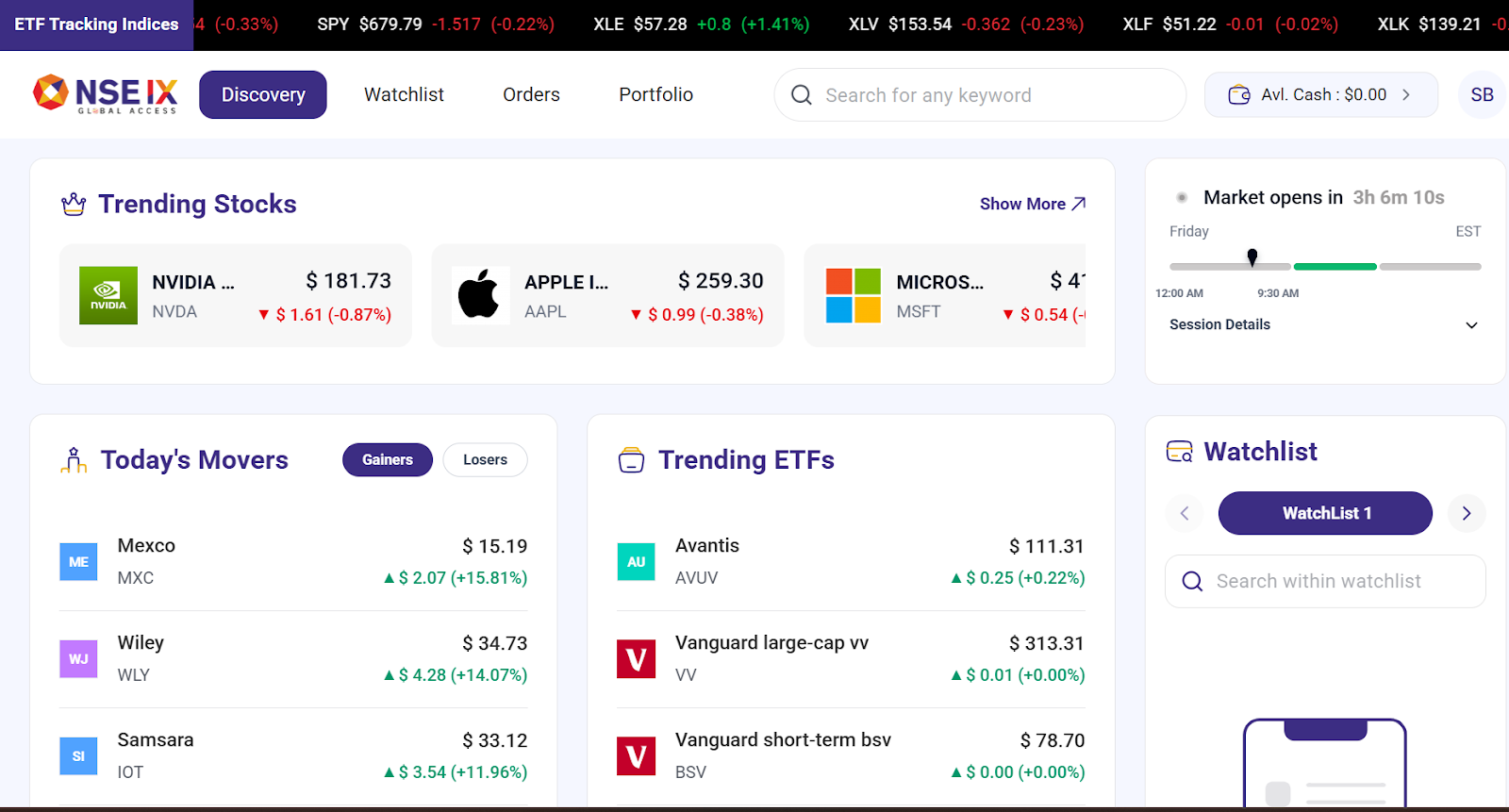
Source: NSEIX GA
Once the account is active, funds are transferred under the LRS framework, similar to any other overseas investment. The money is routed through a bank account linked to the GIFT City infrastructure before it reaches the brokerage account used for trading.
Like most modern global investing platforms, these exchanges also support fractional investing. This means investors are not required to purchase a full share of a company.
For example, if a stock such as Apple is trading at $272 per share, an investor does not need to buy the entire share. They can invest a smaller amount, such as $5 or $10, and own a proportional fractional position.
However, there are also clear boundaries on what investors can trade through these platforms.
Because investments must comply with the Liberalised Remittance Scheme, the available asset classes are restricted to those permitted under LRS. This typically includes equities, exchange-traded funds, and certain debt instruments.
Products such as derivatives and cryptocurrencies are not permitted under the LRS framework for retail investors.
It is also important to remember that these investments still fall under the annual LRS remittance limit of $250,000 per financial year.
This limit applies to all overseas investments combined, whether they are made through international brokerage platforms, GIFT City exchanges, or other cross-border investment structures.
So while the infrastructure sits inside India geographically, the investment itself is treated as a foreign investment transaction, and the same regulatory limits continue to apply.
Comments
Login or register to join the conversation.