










Another aspect investors often overlook is how feeder funds are taxed.
At first, it is easy (this is a very common misconception, too) to assume that these funds would be taxed like equity mutual funds. After all, the underlying investments are global equities.
However, the tax rules in India work differently.
For a mutual fund to qualify for equity taxation, it must invest at least 65% of its assets in Indian equities. Since international feeder funds invest in overseas markets, they do not meet this requirement.
As a result, they are classified as specified mutual funds under Section 50AA of the Income Tax Act.
This classification changes how capital gains are taxed.
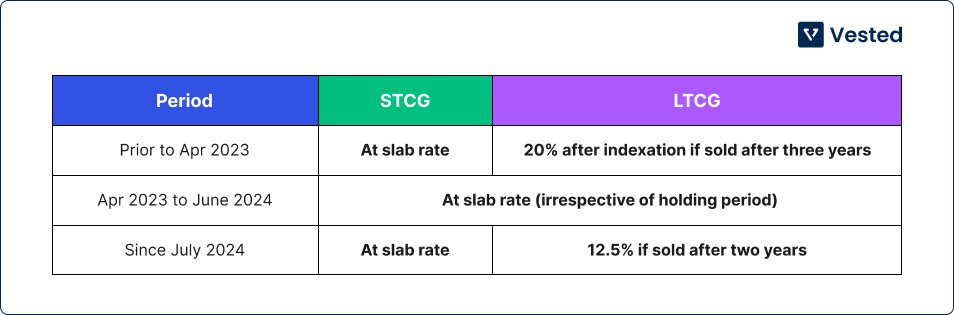
If you sell your investment within 24 months of purchase, any gains are treated as short-term gains. These gains are added to your total income and taxed according to your applicable income tax slab.
If you hold the investment for more than 24 months, the gains are treated as long-term and taxed at 12.5%, without the benefit of indexation.
Because of this rule, the holding period becomes quite important.
Selling a feeder fund investment just a few months too early can materially change the tax outcome.
For example, an investor in the 30% tax bracket who exits just before the 24-month mark could end up paying more than double the tax compared to someone who waits a little longer and qualifies for the lower long-term capital gains rate.
For long-term investors, this makes it important to be mindful of the holding period when planning redemptions.

Comments
Login or register to join the conversation.