










Feeder funds, also called Fund of Funds, are the most common way Indian investors access global markets through mutual funds.
The structure has two layers, and understanding it makes everything else clearer.
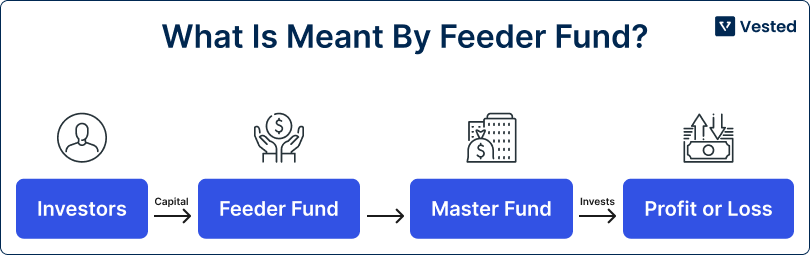
When you invest, your money first goes into an Indian mutual fund regulated by SEBI. This fund collects money from many investors and manages the operational side of things in India. However, it does not directly buy foreign stocks.
Instead, the fund converts the pooled money into foreign currency and sends it to a separate fund located overseas. This overseas fund is called the master fund.
The master fund is the one that actually holds the underlying portfolio of companies.
So the structure works like this:
- The Indian feeder fund collects money from investors in India
- The overseas master fund invests that money into global companies
- The performance of the master fund flows back to the feeder fund and reflects in your investment value as returns
Once you understand this basic structure, most international mutual funds in India start to make a lot more sense.
Let us look at a real example to see how this works in practice.
The Edelweiss US Technology Equity Fund of Funds is one of the best-performing international funds available in India today. It has delivered a 3Y return of 36%.
If you look inside the fund’s portfolio, you will notice something interesting. About 96% of the fund’s assets are invested in a single overseas fund – the JPMorgan US Technology Fund, which is domiciled in Luxembourg.
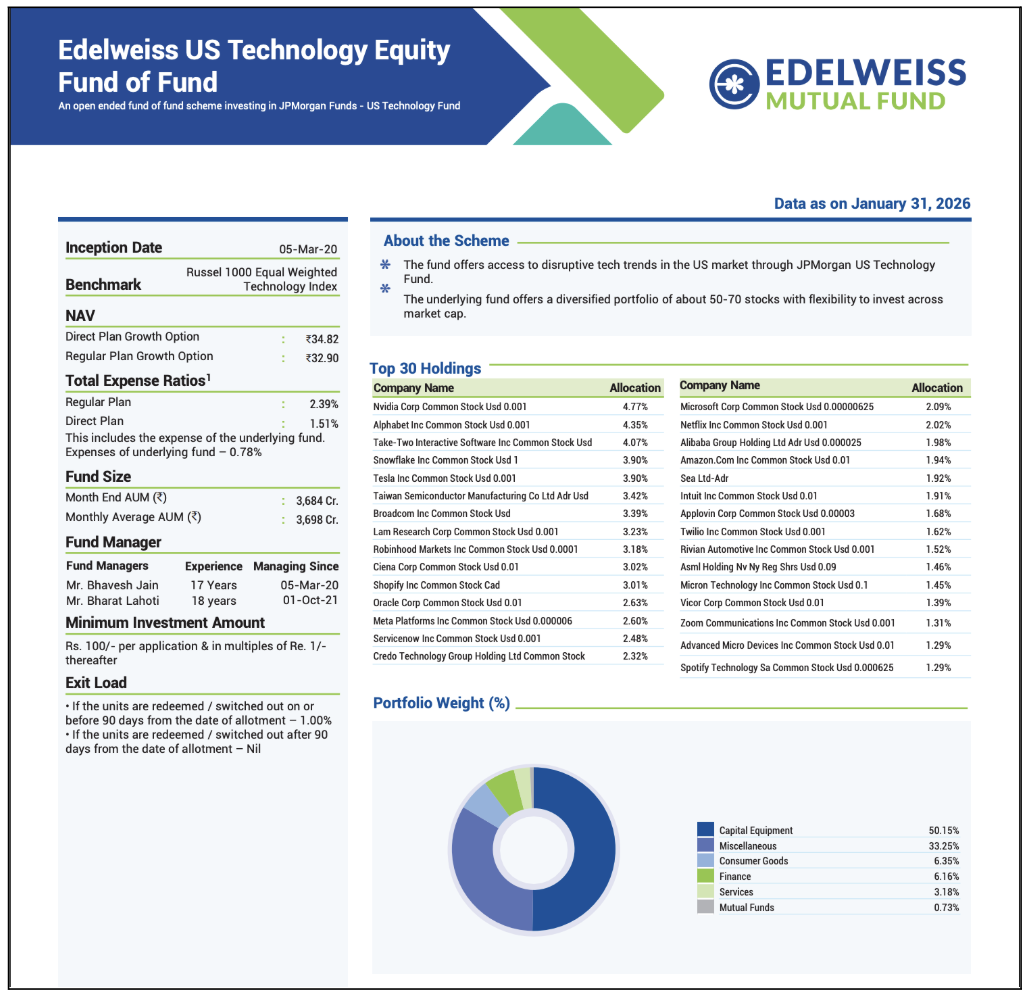
That JPMorgan fund is the master. It holds 50 to 70 US technology stocks, including Nvidia, Alphabet, Broadcom, Microsoft, Netflix, and others.
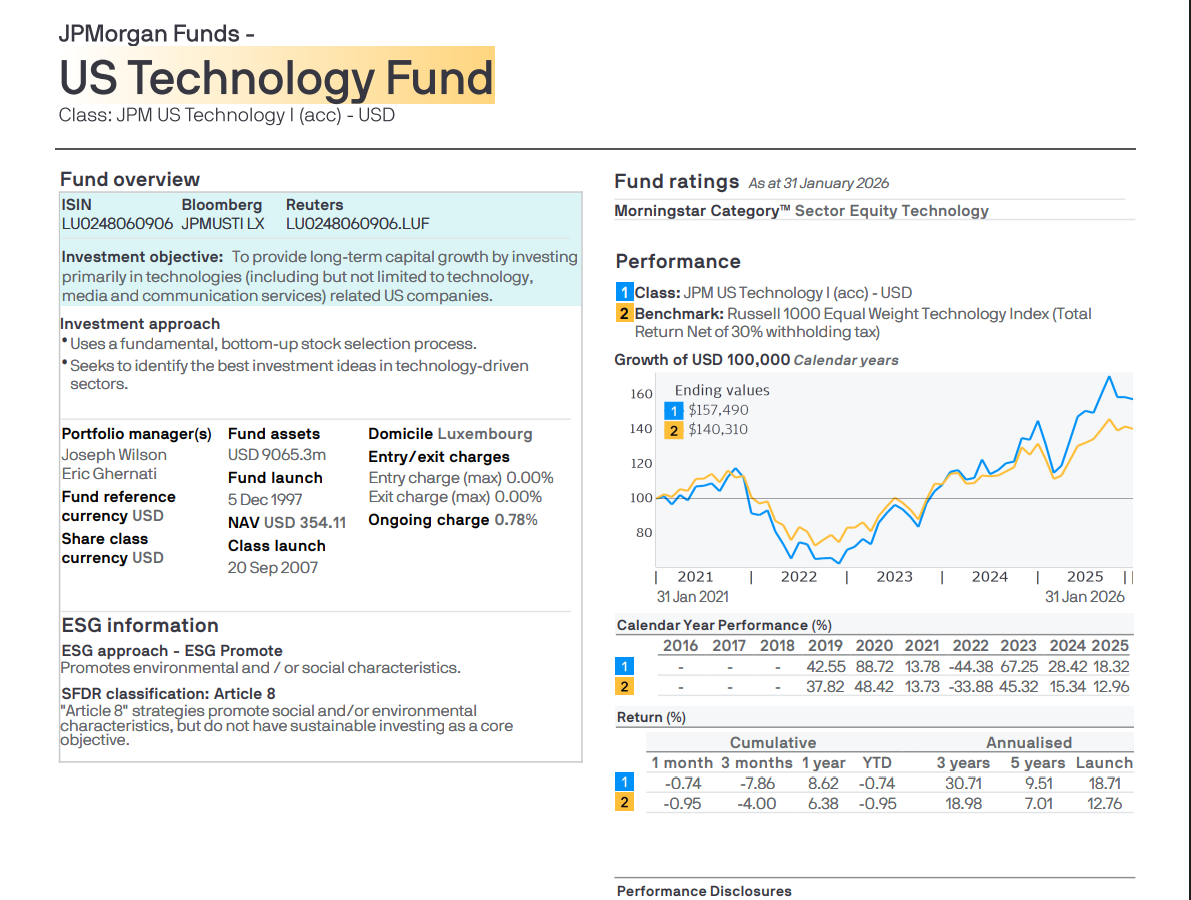
The fund is managed by Joseph Wilson and Eric Ghernati at JPMorgan. Over the last three years, the master fund itself has delivered an annualised return of about 30.71% in USD terms.
For an Indian investor, there is one more factor to consider.
Remember, we discussed currency depreciation in Chapter 1. That is at play here.
Since the underlying portfolio is held in US dollars, the return you experience is also influenced by currency movement. Historically, the Indian rupee has depreciated against the US dollar by roughly 3% per year over long periods. When that currency effect is added, the INR return for Indian investors can end up higher than the USD return generated by the master fund.
On top of returns, there is another detail in this structure that investors should pay attention to.
The JPMorgan master fund charges an ongoing expense ratio of about 0.78%.
The Edelweiss feeder fund, which Indian investors actually invest in, charges around 1.51% for the direct plan. This 1.51% already includes the cost of the underlying JPMorgan fund.
In other words, roughly 0.73% goes to the Indian feeder fund for handling the operational layer that is managing the structure, routing the money abroad, maintaining compliance, and providing access to the overseas fund.
Whether that additional cost is reasonable or not is something investors often debate. We will return to that question later when we compare feeder funds with other routes such as ETFs and direct investing.
It is also worth noting that feeder funds cover a wide variety of global markets and themes.
Some focus on specific geographies, such as the United States, China, or Europe. Others focus on particular sectors or themes, including global technology, commodities, or innovation. Some simply track major indices like the S&P 500 or the Nasdaq-100.
Despite these differences in investment strategy, the structure remains the same.
An Indian feeder fund collects your investment, an overseas master fund manages the actual portfolio, and the performance of that portfolio ultimately determines the value of your investment.

Comments
Login or register to join the conversation.