










Many investors who begin exploring global markets do not start with a blank slate. They usually arrive with a conviction about a particular shift happening in the world.
It could be artificial intelligence becoming the backbone of computing infrastructure. Cybersecurity becoming essential as businesses move online. Or the growing commercialisation of the space industry.
After reading about these developments, many investors want to do something simple. They want their portfolio to reflect that theme they are bullish on.
Now, broad market ETFs often dilute the exposure. An index like the S&P 500 contains hundreds of companies across many industries. Even if some of those companies benefit from the theme you believe in, they will represent only a small part of the index.
The alternative is selecting individual stocks yourself. But that requires identifying the right companies, deciding how much to allocate to each one, and continuously monitoring how the industry evolves.
Even experienced investors find this difficult to manage consistently.
This is where Thematic Portfolios come in.
A thematic portfolio is a basket of companies built around one specific idea. The research team identifies businesses that participate in that theme and constructs a portfolio around them, assigning weights based on their role in the ecosystem.
To see how this works in practice, consider one of the thematic portfolios available on Vested: the Space Tech portfolio.
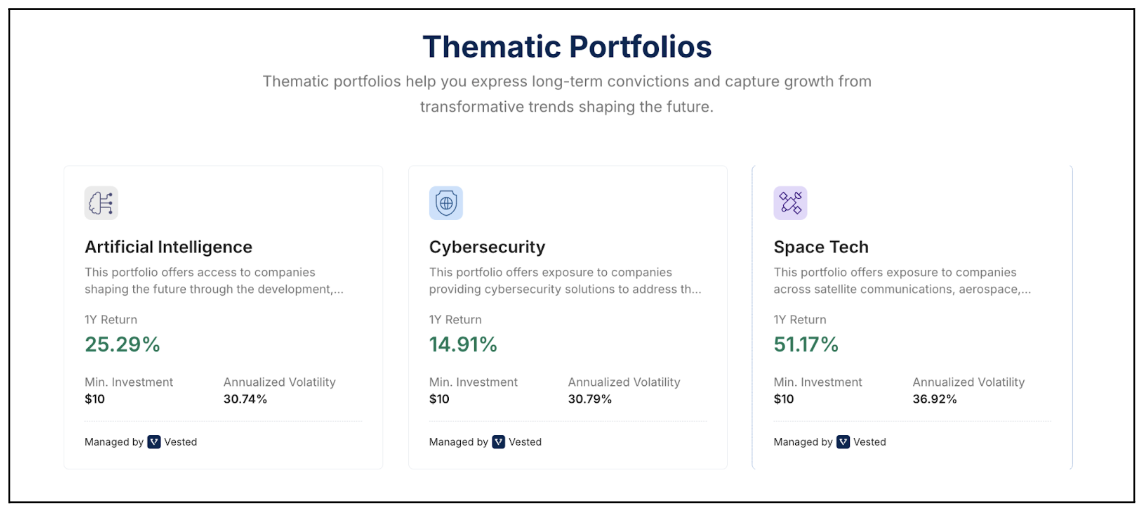
This portfolio focuses on companies involved in different parts of the space economy. Instead of relying on a single company, it spreads exposure across multiple businesses participating in the industry.
The holdings include companies such as:
- Rocket Lab – a launch services and spacecraft manufacturer
- Planet Labs – a satellite imaging and Earth observation company
- L3Harris Technologies – a provider of space and defence technologies
- Trimble – satellite-based positioning and navigation systems
- Viasat – satellite communications infrastructure
Other companies in the portfolio include firms such as Garmin, Boeing, Teledyne Technologies, Honeywell, Lockheed Martin, and Heico, which provide aerospace components, satellite systems, navigation technologies, and mission-critical infrastructure used in space-related applications.
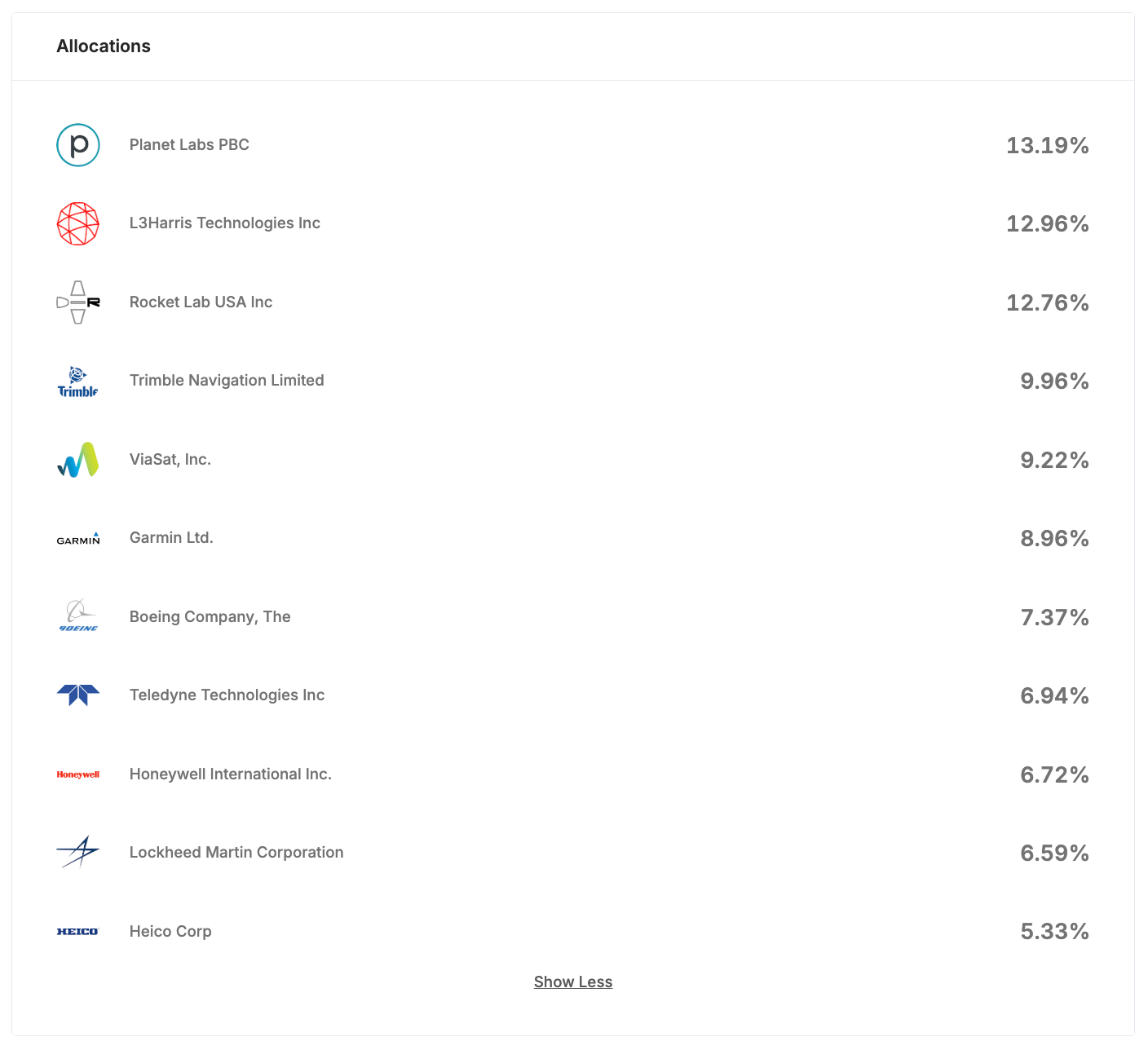
Each company represents a different part of the broader space ecosystem. Some focus on satellite communications. Others develop launch systems, navigation technology, or aerospace components.
The portfolio then assigns allocations across these companies. For example, companies such as Planet Labs, L3Harris, and Rocket Lab each receive meaningful weight in the portfolio because of their direct participation in the space technology ecosystem.
When an investor allocates money to the portfolio, these stocks are purchased in their brokerage account according to the portfolio allocation.
This structure allows investors to gain exposure to the theme without needing to build and maintain the portfolio themselves.
Because thematic portfolios focus on a narrow segment of the market, they tend to be more volatile than diversified portfolios. Their performance is closely tied to how the underlying theme evolves over time.
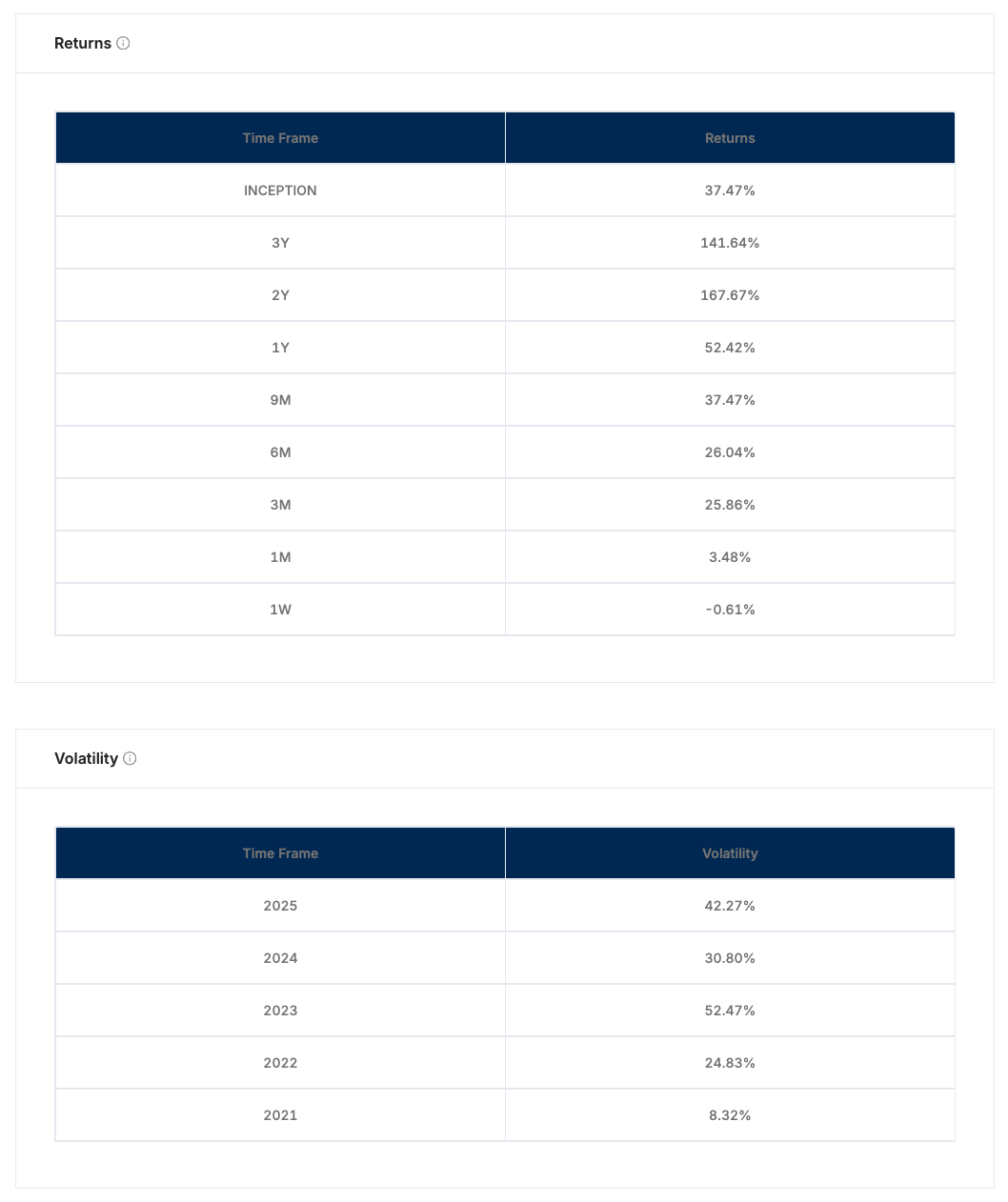
For example, industries such as space technology often involve long development cycles, regulatory oversight, and technological risk. These factors can lead to periods of strong growth but also periods of significant volatility.
For that reason, thematic portfolios generally suit investors who have a long-term perspective and are comfortable with fluctuations along the way.
Comments
Login or register to join the conversation.