










Let us step back and look at the structure of the Indian equity market.
If you look at the Nifty 50, for example, about 38% of the index is in financial services. IT makes up around 10%, and FMCG with the consumer goods sector, stands at about 10%.
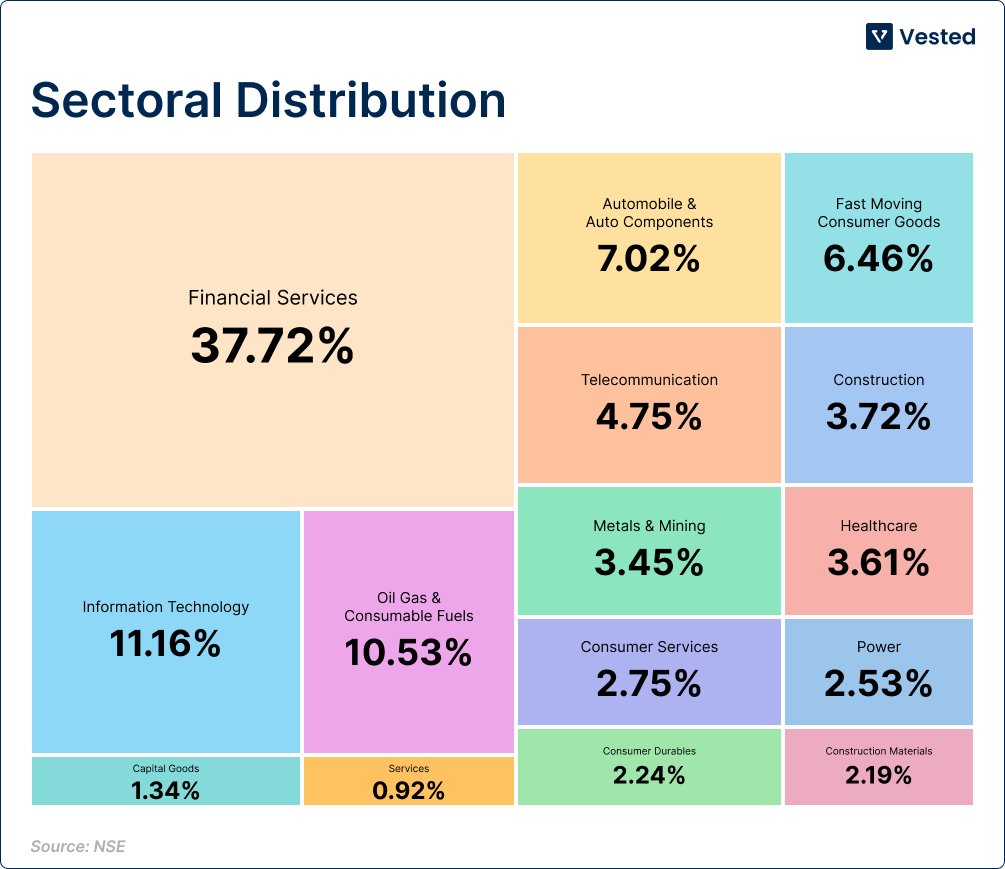
There is nothing inherently wrong with that. These are strong industries and they reflect the stage of India’s economic development. India is still a credit-expanding economy. Financial inclusion is growing. Consumption is rising. Infrastructure is being built. Naturally, these themes dominate the listed market.
But now consider a different question. What are you unable to access?
- Where are the companies that manufacture the world’s most advanced semiconductor chips?
- Where are the global biotechnology firms spending billions on healthcare?
- Where are the large aerospace manufacturers building commercial aircraft engines?
- Where are the global luxury conglomerates whose revenues come from consumers across Europe, the US, China, and the Middle East?
These sectors either do not exist at scale in Indian public markets or are very thinly represented.
But then most of us use these global companies’ products on an almost daily basis.
A Bain & Company report from 2024 noted that over 90% of Indian smartphone users interact with at least one US technology platform every single day. Whether it is searching on Google, shopping on Amazon, watching Netflix, chatting on WhatsApp, or working on an Apple or Microsoft device, these businesses are embedded in everyday life.
Google commands roughly 97% of India’s search market. Amazon India works with more than 4 million MSMEs. Apple’s India revenue crossed ₹79,000 crore in FY25, growing 19% year-over-year.
These companies influence how India works and consumes. And yet, they are not listed on Indian exchanges.
If you want to own a part of Apple, Amazon, Alphabet, or Microsoft, you cannot do it domestically. Accessing them requires stepping into overseas markets.
It is also worth placing this in a broader context. The United States is home to 58 of the world’s top 100 brands.
As of 2025, 9 of the top 10 global companies by market capitalisation are US-listed. Many of the dominant players in semiconductors, biotechnology, enterprise software, aerospace, and global luxury are concentrated there.
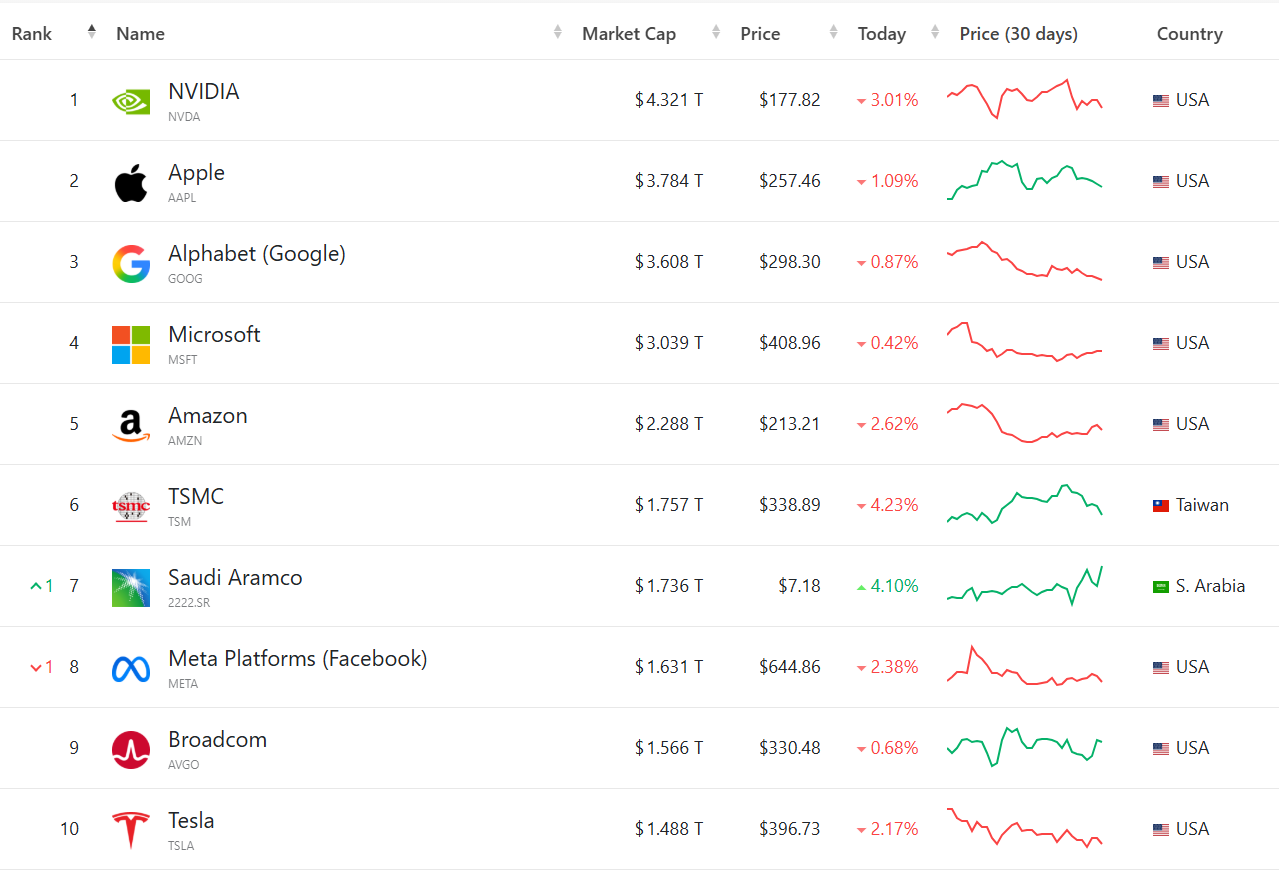
So even if you believe you are diversified within Indian equities, your opportunity set is still defined by what is locally listed.
You may be diversified across sectors. But you are still operating within a narrower industrial base than what exists globally.
Comments
Login or register to join the conversation.