 Skip to content





Welcome to Vested Shorts,

The World in a Week: How Major Markets Moved
United States | U.S. equities started the year higher, led by small caps. The Russell 2000 rose 5.7%, while the S&P 500 gained over 1% and the Nasdaq added 1.1%. December payrolls came in soft at 50,000, pointing to cooling labor conditions. Manufacturing stayed in contraction with ISM PMI at 47.9, while services remained resilient.
Europe | European stocks advanced, with the STOXX Europe 600 up 2.3% and Germany’s DAX rising 2.9%. Eurozone inflation eased to 2.0%, though sticky services inflation kept rate cut expectations measured.
Japan | Japanese markets climbed, with the Nikkei 225 up 1.8% and TOPIX up 3.1%. The 10-year JGB yield rose to 2.09% as expectations of gradual policy tightening persisted.
China | Mainland markets gained, led by technology stocks. The CSI 300 rose 2.8% and the Shanghai Composite gained nearly 3.4%. CPI increased 0.8% year over year, supporting expectations of continued policy easing.
India | Indian markets took comfort from RBI liquidity support, including ₹2.9 trillion in bond purchases and a $10 billion USD/INR swap, helping ease funding stress.
Commodities | Gold stayed elevated after a strong 2025. Brent crude hovered in the low $60s, weighed by ample supply and cautious demand, while silver remained volatile.

Stock market closing data for the week of Jan 5 to Jan 9, 2026
Index information: STOXX 600 (tracks 600 large, mid- & small-cap EU firms), DAX (top 40 German blue chips), CAC 40 (leading French stocks), Nikkei 225 (225 top Japanese stocks), CSI 300 & SSEC (mainland China A-shares), and Hang Seng (large-cap Hong Kong-listed firms). For these indices, we track 1-week returns to capture how global sentiment is shifting.
News Summaries
AI just made power the real bottleneck

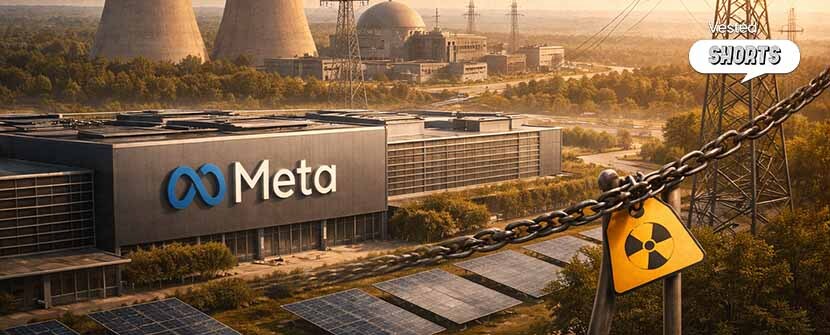
When Meta Platforms Inc. signed long term nuclear power agreements, the market reaction was instant. Oklo Inc. surged nearly 20 percent. Vistra Corp. jumped sharply. Even uranium suppliers moved higher. This was not about one deal. It was about a constraint being acknowledged.
AI is no longer limited by models, chips, or talent. It is limited by electricity. Data centers need power that runs without interruption, scales for decades, and does not depend on weather or short term pricing. Nuclear fits that requirement better than most alternatives.
Meta signed a 20 year agreement with existing nuclear plants and backed Oklo’s small modular reactors, even though they are not commercial yet. That is the key signal. Capital is committing before certainty exists.
Nuclear had been shrinking for years due to costs and shutdowns. AI changed the math. The market is not pricing electricity. It is pricing who gets reliable power first.
TSMC is answering the AI bubble question
Taiwan Semiconductor Manufacturing Co. beating revenue estimates does not settle the AI bubble debate. But it does narrow it.
December quarter revenue came in at about NT$1.05 trillion, ahead of expectations. For a company that already sits at the center of global chip manufacturing, surprises at this scale are rare. What matters is where the strength came from. Leading edge nodes used in AI accelerators and premium smartphones are running hot enough to erase what used to be a seasonal slowdown.
That is the part many investors miss. If AI demand were getting ahead of itself, TSMC would be the first place it shows up. Instead, utilization remains tight, and suppliers like ASML Holding NV are seeing the benefits.
The next signal is capital spending. If TSMC follows through with a materially higher 2026 capex plan, it tells you how management is positioning, not how headlines feel.
In cycles like this, watch what the foundry commits to building and not what the market debates.
Stablecoins are turning into a parallel dollar network
Stablecoin volumes reaching $33 trillion in 2025 is not a crypto milestone. It is a monetary one.
What stands out is not growth, but usage. Activity is shifting away from purely crypto native platforms toward payments, settlements, and dollar storage. That only happens when a tool stops being experimental and starts being trusted. Policy clarity in the US accelerated this shift, giving institutions the confidence to treat stablecoins as infrastructure rather than exposure.
The split between Circle Internet Group Inc. and Tether Holdings SA explains how this system is forming. USDC dominates high velocity financial flows where liquidity and compliance matter. USDT dominates holding and everyday transfers where access matters more than structure. This mirrors how dollars behave globally.
The real driver is demand for dollars outside the banking system. In inflation hit or capital controlled economies, stablecoins solve a practical problem banks do not.
At this stage, stablecoins are less a crypto trade and more a signal. Dollar influence is expanding through software, not branches.
Community Meetups in the USA

As more Indians in the U.S. think about investing back home and long term life decisions, we are hosting small, in-person community meetups to have these conversations properly.
Upcoming meetups:
Investing in India as a U.S. NRI: Law, Structure, and Access with Serotte Law
New York City | Jan 21, 2026 from 6 PM EST | Register for this event
To Move Back to India or Not with Nupur Dave
South Bay, California | Jan 16, 2026 from 5:30 PM PST | Register for this event
Seattle, Washington | Jan 18, 2026 from 5 PM PST | Register for this event
Seats are limited to keep discussions practical and interactive.
Key Headlines of the Week
Chevron Eyes Venezuela Upside, but Stays Cautious | Chevron Corp. could add $400–$700 million a year in cash flow by raising production in Venezuela, but is likely to rely on existing assets as political and fiscal uncertainty limits new investment.
China Leads Early in Humanoid Robots | Chinese firms shipped most of the roughly 13,000 humanoid robots sold globally last year, outpacing US peers like Tesla Inc., helped by lower costs and faster manufacturing scale.
xAI Spends Heavily to Build Scale | xAI reported a $1.46 billion quarterly loss as it ramped spending on data centers and talent, highlighting how capital-intensive the AI race has become.
