





The way Indians invest is slowly changing.
Earlier, investing outside India was seen as complicated, expensive, and meant only for wealthy investors. Today, global investing has become far more accessible through digital investment platforms and international funds.
Yet many investors still hesitate to explore global markets because of concerns around risk, taxation, regulations, and returns.
Understanding these misconceptions is important because global investing can help investors diversify across economies, sectors, and market cycles.
Indian Investors Global Funds Misconception
What are Global Funds
Global funds allow investors to invest beyond domestic markets and participate in the growth of international companies and economies. With these funds, investors can gain exposure to global innovation themes, multinational businesses, and developed-market economies.
Understanding UCITS Funds
Today, many international funds available to Indian investors are offered through globally regulated investment structures. One of the most widely used structures is UCITS (Undertakings for Collective Investment in Transferable Securities), a European regulatory framework designed for diversification, liquidity, transparency, investor protection, and tax efficiency.
Indian investors can now access actively managed UCITS funds from global financial institutions such as BlackRock and Goldman Sachs through digital investing platforms like Vested Finance.
Example of Global UCITS Funds Available to Indian Investors
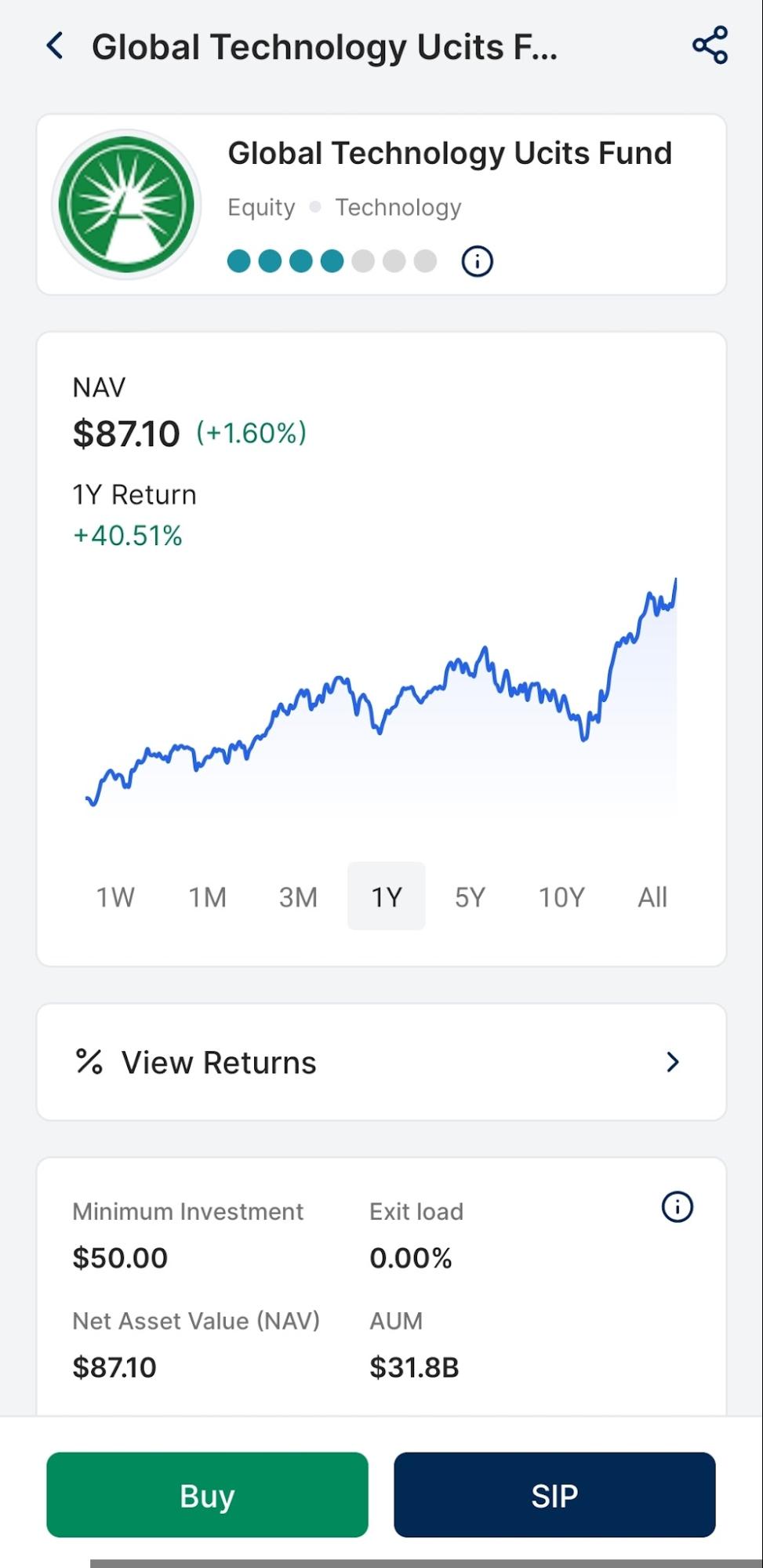
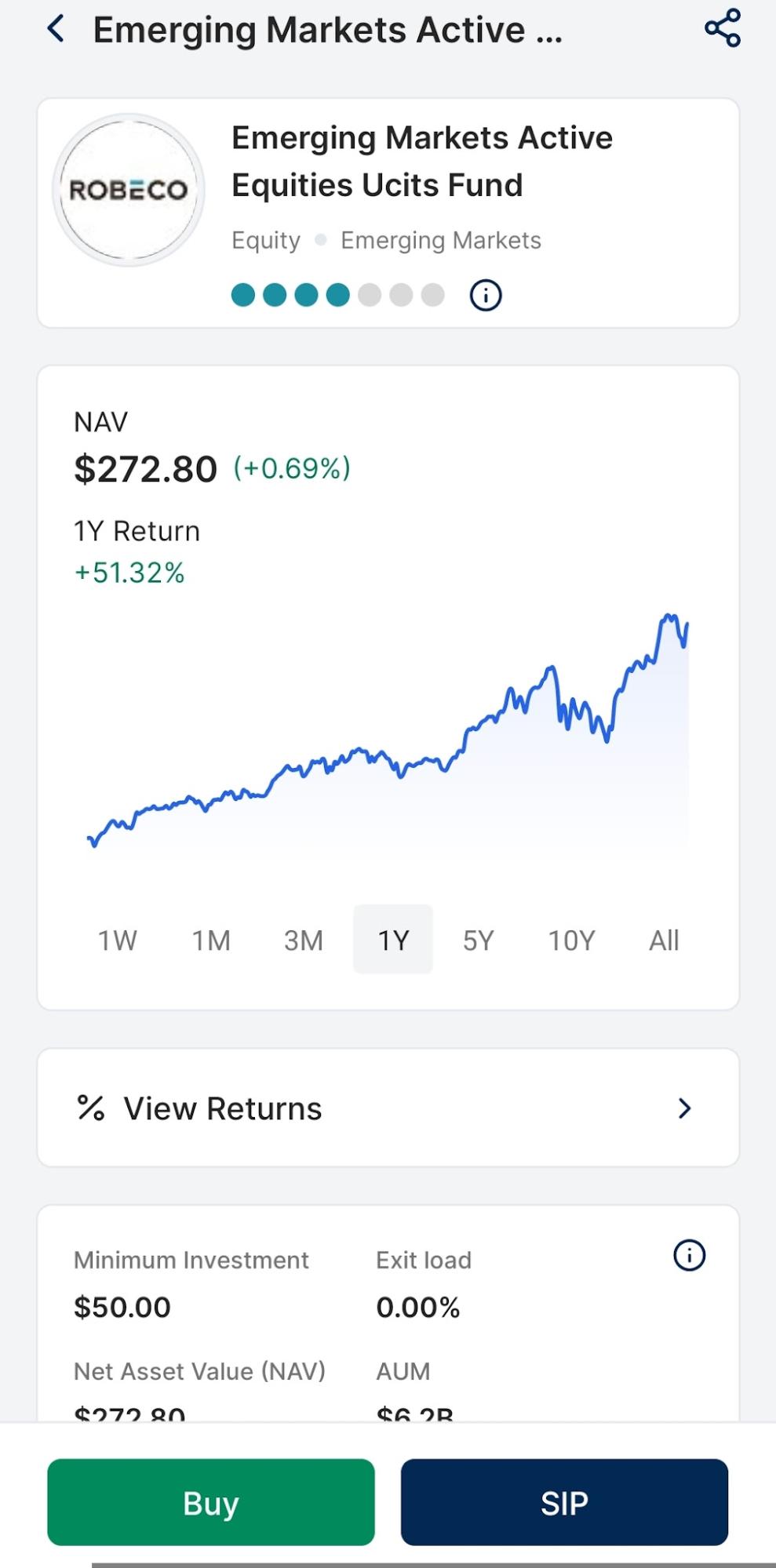
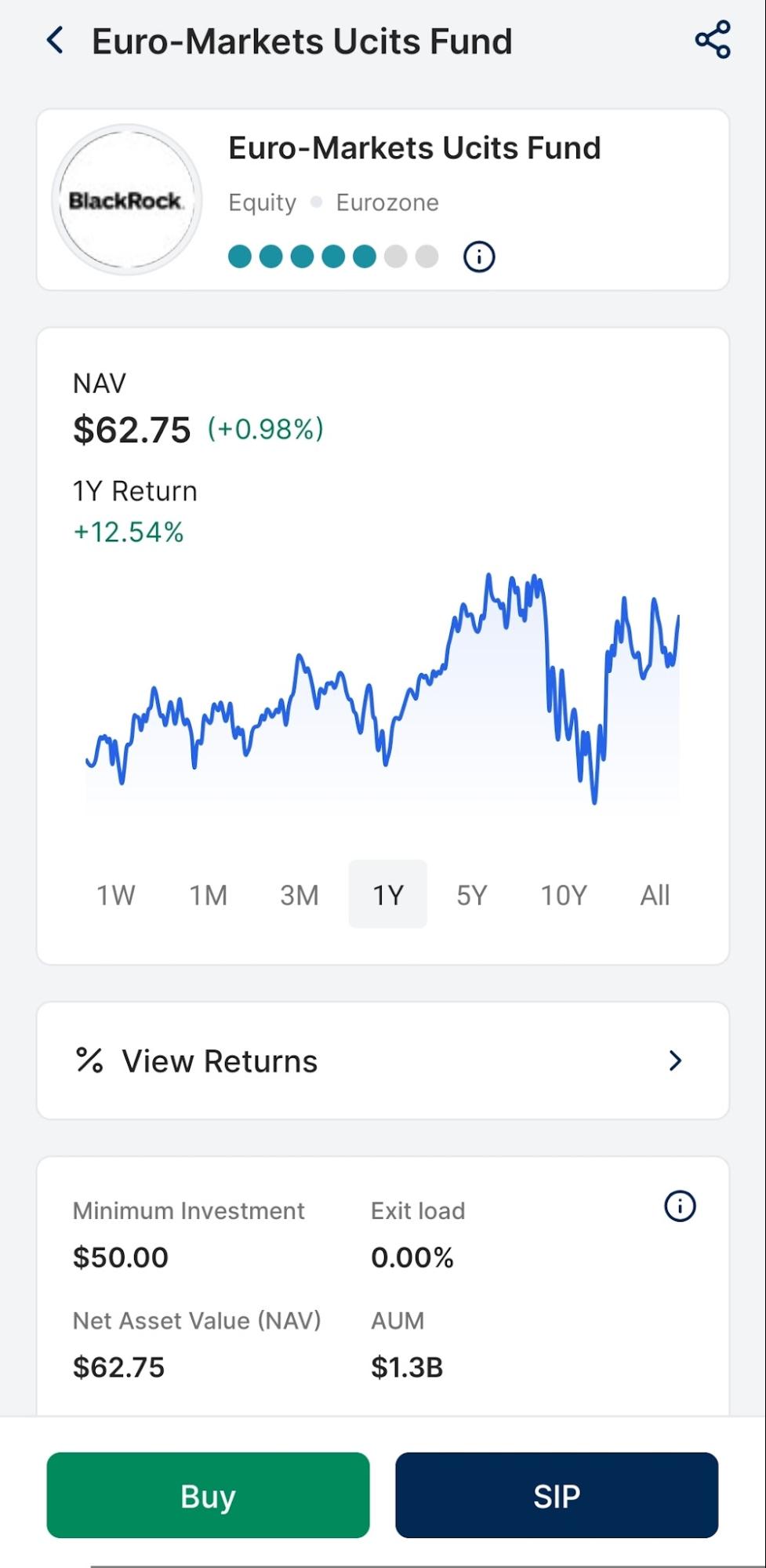
Some examples of actively managed UCITS funds available to Indian investors on Vested Finance.
For instance, Fidelity’s Global Technology UCITS Fund invests in technology companies worldwide across segments such as software, semiconductors, hardware, and digital infrastructure.
Similarly, Robeco’s Emerging Markets Active Equities UCITS Fund focuses on emerging market equities using a quantitative factor-based investment approach, with significant exposure to countries such as China, Taiwan, and South Korea.
Meanwhile, BlackRock’s Euro-Markets UCITS Fund allocates a major portion of its portfolio to companies based in Eurozone countries, with substantial exposure to industrial and financial sector stocks.
However, despite increasing accessibility, many investors continue to hold misconceptions about global funds and international investing.
Myth 1 – Global Funds Are Too Risky for Indian Investors
Many investors assume global funds are riskier simply because they invest outside India. But historical data suggest otherwise.
One of the most followed global indexes is the MSCI World Index, which includes stocks across 23 developed economies. Many global equity mutual funds and ETFs are built around this index.


Source: MSCI, FTSE, February 27, 2026
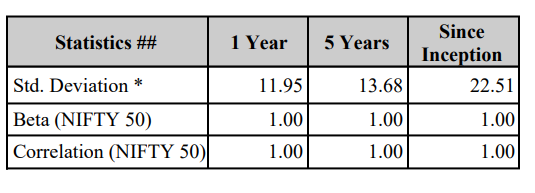
Source: Nifty Indices, February 27, 2026
Over the long term, the MSCI World Index has recorded a standard deviation, the key measure of risk, of around 14-15%. This is broadly comparable to the long-term volatility of Nifty 50. The standard deviation of the Nifty 50 index, it is nearly 14% over the long term. This indicates global funds are not necessarily riskier than domestic investing.
Myth 2 – Global Funds Are Only for High-Net-Worth Investors
Many investors believe global investing requires large capital and is suitable only for HNI investors. While this may have been true earlier, that is no longer the case today.
Platforms like Vested Finance offer access to more than 500 global funds across 50 countries, with investments starting as low as $50.
Many of these are actively managed UCITS funds offered by global asset managers such as BlackRock, Goldman Sachs, and Fidelity.
Myth 3- Investing in Global Funds Attracts Estate Tax
Investing directly in US-listed stocks and ETFs can indeed attract US estate tax in certain cases if the value of holdings exceeds $60,000.
However, many global funds available to Indian investors use the UCITS structure. These are listed funds and regulated by the European Union, which helps to significantly reduce estate tax exposure.
This is one reason UCITS funds are widely preferred for international investing. Along with potential tax efficiency, they also follow strict European regulations related to diversification, liquidity, and investor protection.
Myth 4 – Investing Globally Means Losing Control Over Returns
When it comes to investing globally, many investors fear they will lose control over their returns. This belief is largely driven by home bias in investing, because people tend to prefer things that are familiar. Whether it is taking the same road to work every day or choosing the same brands repeatedly
But diversification across economies and market cycles can actually make portfolios more stable over time.
For example, the MSCI World Index, a widely tracked global index, has delivered a 12-15% annualized return over the long term. Despite short-term fluctuations, the index has shown relatively steady returns across market cycles.
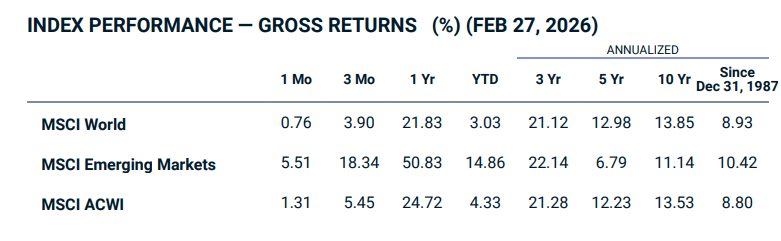
This shows that investing globally does not mean losing control over returns. Instead, it helps investors reduce dependence on a single market or economy.
Myth 5 – Global Funds Always Underperform Indian Equity Funds
India remains one of the fastest-growing economies in the world, and in the long term, returns have been quite strong.
However, global markets can outperform during certain phases, especially when new technologies or industries drive growth.
A strong example of this is the long-term rally in global technology stocks led by themes such as artificial intelligence, cloud computing, and digital transformation. Companies such as NVIDIA, Alphabet, Amazon, and Microsoft have been among the key drivers of global market performance over the past decade.
As a result, the Nasdaq 100 delivered an annualized return of nearly 19% over the 10 years ending March 2026, compared to around 13% annualized return delivered by the Nifty 50 during the same period.
This shows that while Indian equities can deliver strong long-term performance, global markets may outperform during certain innovation-led themes.
Myth 6 – Currency Risk Makes Global Investing Unpredictable
Currency risk, or exchange-rate risk, indeed poses a big challenge in global investing. Fluctuations between the INR and other currencies, especially the USD, can influence portfolio performance.
These concerns are partly valid. Over the long term, currency movements have worked in favor of Indian investors.
Historically, INR has depreciated against the USD. Since 2020, INR has depreciated from ₹70 per dollar to around ₹93 per dollar. This means Indian investors holding global funds will not only benefit from equity market gains, but also from currency depreciation.
For example, suppose B invested ₹10,000 in a global fund in 2020 when the USD-INR exchange rate was ₹70. This means the investment was roughly around $143.
Six years later, the investment value grew to about $280. Now B wants to sell the investment. After converting back to INR at an exchange rate of ₹93, the investment would be worth nearly ₹26,000. A gain of nearly 160%.
This example shows that currency movements do not always add risk. Over long periods, they can enhance overall returns for Indian investors.
Myth 7 – Global Funds Offer No Real Diversification
Diversification is not only about holding many stocks. It also means spreading investments across different sectors, economies, and market cycles.
The Indian market is largely dominated by sectors such as the financials and energy, while global markets have stronger exposure to technology, healthcare, and multinational consumer companies.
Take, for example, the MSCI World Index, which is heavily weighted toward technology, healthcare, and global consumer companies. Sectors where developed economies have strong innovation and global leadership.
This difference in sector composition means returns are driven by different forces.
That is why globally diversified UCITS funds can help investors reduce dependence on a single market and build a more balanced long-term portfolio across geographies and sectors.
Myth 8 – Global Funds Are Just US-Focused Funds
Investing in global funds doesn’t mean you’re only investing in US markets. While US stocks do have a significant weight, global funds are designed to invest across multiple countries.
For instance, the MSCI World Index includes companies from 23 developed economies. The MSCI ACWI Index tracks stocks across both developed and emerging markets in more than 45 countries.
Even though the US dominates global indices due to its large market size, global funds still provide exposure to many regions, sectors, and economies.
Myth 9 – Global Funds Are Not Suitable for SIP Investors
Many investors believe global funds are too volatile for SIPs. It is one of the biggest SIP myths.
Global markets move through different economic cycles. Some years the US outperforms, other years emerging markets will lead. SIP in global funds allows investors to enter these cycles gradually instead of trying to time them.
For example, during phases when US tech stocks rally or when other developed markets outperform, SIP investors automatically accumulate units across those periods. Over time, this disciplined approach helps build exposure to global leaders without worrying about short-term market timing.
Myth 10 – Global Funds Are Poorly Regulated and Unsafe
Many investors assume global funds are unsafe and poorly regulated. However, this is one of the biggest misconceptions around international investing.
In reality, many global funds available to Indian investors are structured under the UCITS framework. UCITS funds are regulated under European Union standards and are widely regarded as one of the strongest regulatory structures for investment funds globally.
Additionally, many of these global funds are managed by established institutions such as BlackRock and Goldman Sachs, which have decades-long track records in managing global investments and maintaining high operational and risk-management standards.
Check out the actively managed UCITS funds from BlackRock, Goldman Sachs, and Fidelity on Vested Finance.
Further, to invest in these from India, platforms have to operate within the RBI’s Liberalised Remittance Scheme (LRS) framework and comply with applicable Indian regulations.
Final Thoughts on Debunking Global Fund Myths
Many diversification myths and global mutual funds myths surrounding global funds come from familiarity bias.
Investors naturally feel more comfortable investing in the home market. But investing globally should not be seen as a substitute, but as a strategic complement.
India remains one of the fastest-growing major economies, yet it represents only a small slice of the global equity market. Limiting investments to domestic markets can mean missing out on innovation, global brands, and industries shaping the future.
A balanced approach works best. By combining Indian equities with global funds, investors can diversify risk, access broader growth opportunities, and build a more resilient long-term portfolio.
