






China is the second-largest equity market in the world (see Figure 1), and one of the hardest for an outside investor to hold with any conviction. The past five years have delivered a property slowdown, a regulatory reset across internet and education companies, and a rolling debate about how much of the market is investable at all.
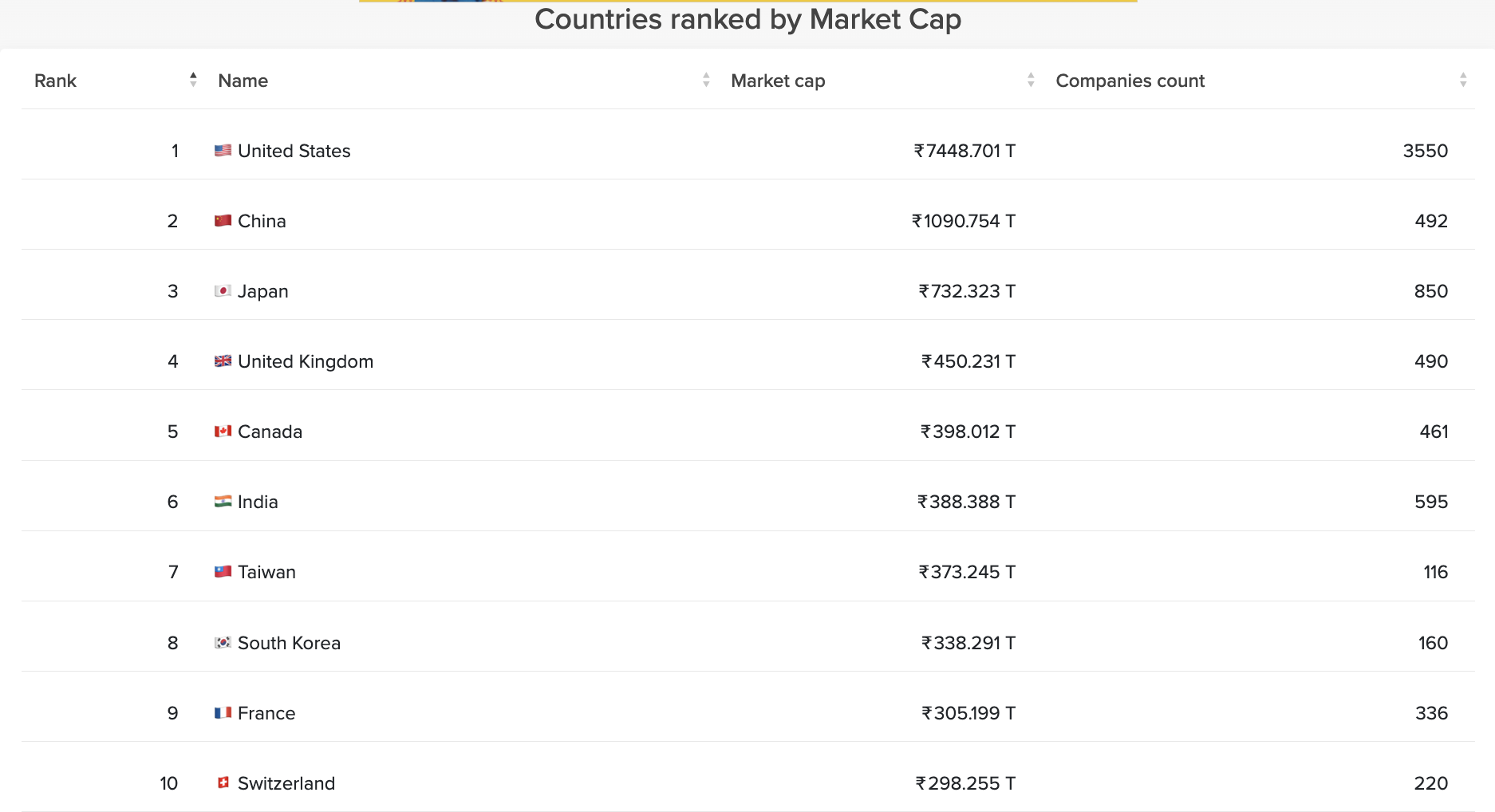
Figure 1: Countries ranked by market capitalisation. Source: Companies Marketcap
Building that exposure stock by stock can be genuinely difficult from India. You are dealing with mainland A-shares, Hong Kong listings, US-listed ADRs, and companies like Prosus that are listed in the Netherlands but earn most of their value from a Chinese business. Different exchanges, different disclosure standards, different risks.
The Fidelity China Focus Fund takes a specific view on that problem. It runs a concentrated portfolio of 77 positions with a value-contrarian style, deliberately buying parts of the market that are out of favour. Since inception, the fund returned 14.9% (net of fees). Over the same period, its benchmark index delivered 9.0%, and the fund ranked 6th out of 78 funds in its Morningstar peer group.
That combination – positive in absolute terms, top-quartile relative to peers – is the story of this fund, and it is why it should be a careful read rather than a quick one. So let’s get into it.
Why Fidelity and what makes this fund special?
Fidelity International has been managing money since 1969 and manages over $1 trillion (see Figure 2) in assets. It is best known for a research-first, bottom-up approach as analysts cover individual companies rather than trading top-down macro views.
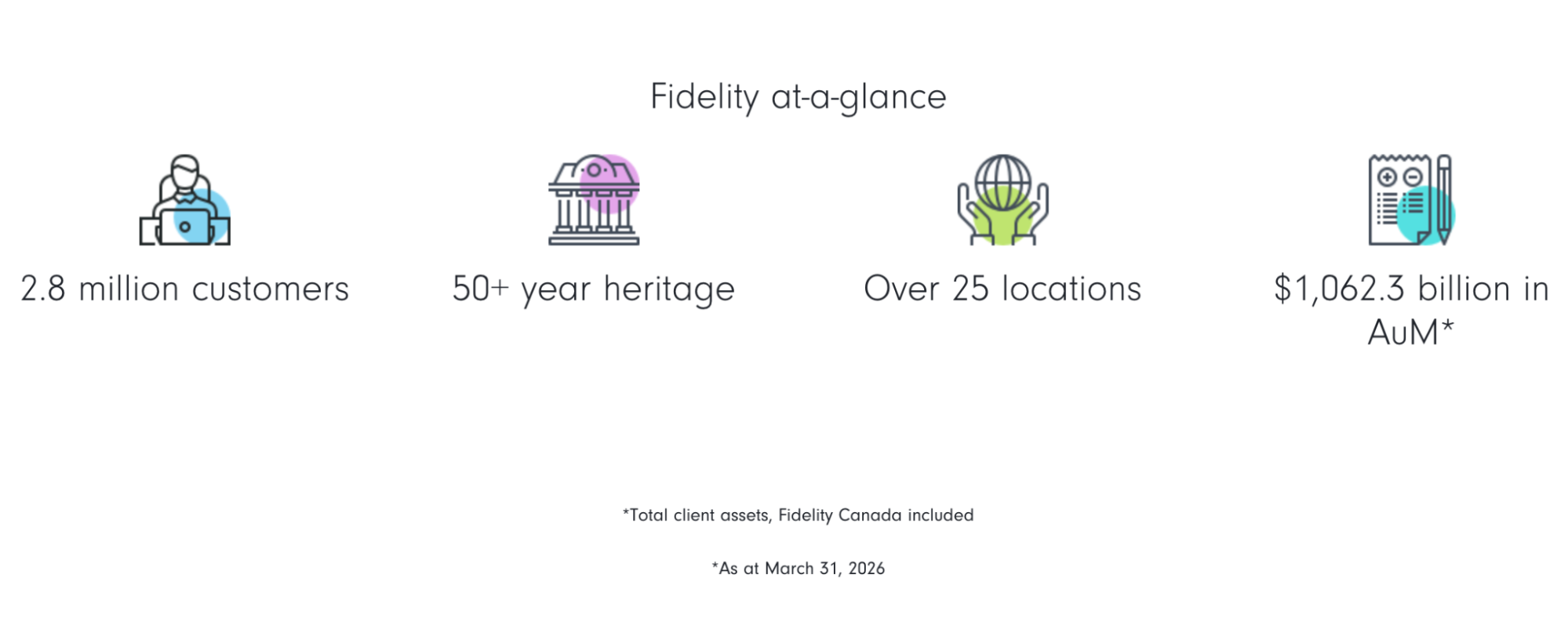
Figure 2: Fidelity International snapshot. Source: Fidelity International
The China Focus Fund is one of its longer-running regional strategies. It launched on 18 August 2003, giving it a 23-year track record through the 2008 crisis, the 2015 A-share crash, the 2021 regulatory reset and the property downturn. The specific share class available to most international investors, A-ACC-USD, launched on 19 May 2015, so the share-class-level record runs about 11 years.
The fund holds $1,983 million in assets across 77 positions. It is a Luxembourg-domiciled SICAV structured as a UCITS fund – a European regulatory standard that sets rules on diversification, liquidity and disclosure, and is the format most global funds sold to non-US investors use.
What actually distinguishes it is how far it sits from the index. Its Active Money is 68.6%, meaning roughly two-thirds of the portfolio does not overlap with the MSCI China Capped 10% Index at all. Very few China funds are that far off-benchmark. That is a deliberate choice by the two managers, and it explains almost every unusual number that follows.
What’s inside: Strategy, exposure, and performance
Strategy
The mandate requires at least 70% of assets in equities of companies listed in China and Hong Kong, plus non-Chinese companies that do most of their business in China. The fund may hold up to 60% of assets in China A and B shares – the mainland-listed market directly or indirectly. It may also hold money market instruments on an ancillary basis. The stated objective is capital growth over time.
The style is where it gets specific.
The managers run a value-contrarian approach: fundamentals-driven, bottom-up stock selection focused on identifying sound businesses run by good management teams in segments of the market that are currently out of favour. The logic is that out-of-favour segments throw up bigger valuation gaps, which offer what the managers describe as a margin of safety.
In practice, that means the fund tends to own what the index does not, and to avoid whatever is currently crowded. It also means it can lag badly when the popular part of the market is running.
One cost note – the fund operates with a 1.50% annual management charge. The share class is accumulating, so income is reinvested rather than paid out.
Regional and sector exposure
Despite the name, this is not a purely mainland portfolio.
- China – 77.3% (index: 99.9%)
- Hong Kong – 6.8%
- Netherlands – 5.0%
- Australia – 2.1%
- Kazakhstan – 2.0%
- USA – 1.3%, Taiwan – 1.2%, Indonesia – 0.9%, Canada – 0.8%, Germany – 0.2%
Total geographic exposure is 97.5%, with 2.5% in uninvested cash. The off-China names are companies whose economics are tied to China but whose listings sit elsewhere say Prosus NV, listed in the Netherlands, is the clearest example at 5.0% of the fund.
The sector picture is where the contrarian style shows up most:
- Consumer Discretionary – 27.2% (index 23.4%)
- Communication Services – 18.2% (index 15.2%)
- Financials – 10.4% (index 20.1%)
- Industrials – 9.6%, Consumer Staples – 8.8%, Real Estate – 7.3%
- Materials – 6.4%, Energy – 5.4%
- Information Technology – 1.5% (index 14.4%)
- Utilities – 1.5%, Health Care – 1.3%
Read that Information Technology line again. The fund holds 1.5% in tech against an index weight of 14.4% – a 12.9 percentage point underweight. An investor buying this expecting a China tech play is buying almost the opposite. Financials are similarly underweight by 9.7 points.
The fund also sits much further down the market-cap scale than its benchmark. Only 48.7% is in companies above $10bn, against 84.5% for the index, while 28.0% sits in companies below $5bn. Smaller Chinese companies are less liquid and less covered, which is both the opportunity the managers are chasing and a real risk.
Top holdings (as of June 2026)
| Holding | Sector | Location | Weight |
| Tencent Holdings | Communication Services | China | 10.2% |
| Prosus NV | Consumer Discretionary | Netherlands | 5.0% |
| China Merchants Bank | Financials | China | 3.7% |
| BOC Aviation | Industrials | China | 3.6% |
| Alibaba Group Holding | Consumer Discretionary | China | 3.3% |
Source: Fidelity China Focus UCITS Fund Factsheet
Below that sit NetEase (3.2%), Douyin Co (2.8%), China Mengniu Dairy (2.8%), Zijin Mining (2.6%) and China Overseas Land & Investment (2.2%), among others.
The top 10 make up 39.4% of the portfolio, against 37.7% for the index so concentration at the top is roughly index-like. The difference is what comes after: the top 50 account for 88.7% of the fund versus 66.7% for the index. Alibaba is a useful tell at 3.3%, the fund holds it at less than half the index weight of 8.8%.
Performance
Three things stand out.
First, the five-year record is a small loss in absolute terms as this fund has not made money over five years.
Second, it lost far less than its index over that stretch, which is why it ranks 6th of 78 funds and in the 1st quartile of its peer group over five years.
Third, the record since inception is strong, beating the benchmark since inception.
The downside protection is visible in the calendar years. In 2021 the fund returned -4.1% against an index fall of -20.3%; in 2022, -2.8% against -21.5%. The risk statistics over three years back this up: annualised volatility of 20.55%, relative volatility of 0.88 and a beta of 0.85, all indicating a fund that moves less than its benchmark.
This is a high-volatility, single-country equity fund that has historically fallen less than its market.
Meet the managers: Nitin Bajaj and Alice Li’s vision
The fund is co-managed by Nitin Bajaj, who has been at Fidelity for 23 years and was appointed to this fund on 30 September 2022, and Alice Li, who has been at Fidelity for 7 years and was appointed on 1 August 2021. Li has therefore been on the fund slightly longer than Bajaj.
Their stated approach is value-contrarian and fundamentals-driven: find good businesses run by good management in unloved parts of the market, where valuation anomalies create a margin of safety.
The current portfolio shows what that looks like in practice. The following are positioning facts drawn from the 30 June 2026 factsheet, not manager statements:
- A near-total avoidance of Information Technology: 1.5% of the fund against 14.4% in the index, the single largest sector underweight in the portfolio.
- A significant underweight to Financials: 10.4% against 20.1% while holding a concentrated position in China Merchants Bank at 3.7%.
- A deliberate move down the market-cap scale, with 28.0% of the fund in companies below $5bn against 4.0% for the index.
- Willingness to hold the China trade outside China, most visibly through Prosus NV at 5.0%.
The portfolio turnover rate is 72.6% with a portfolio turnover cost of 0.11%, so positions do move, but this is not a high-frequency strategy.
Why it belongs in a global portfolio and on Vested
- Contrarian exposure, not consensus exposure. With Active Money at 68.6% and a 12.9-point underweight to tech, this fund gives access to a version of China that looks nothing like a typical China index fund. If you want China exposure that does not simply track the same handful of internet giants, this is a genuinely different portfolio.
- Global access, local simplicity. The fund’s holdings span mainland China, Hong Kong and several other listings, but access from India is straightforward. Investment goes through the LRS route, INR converts to USD automatically, and there is no foreign broking account to open, as you can hold it alongside your U.S. stocks and ETFs in one place. With offerings on Vested, you can invest in this fund with $50 and start SIP too.
- Diversification beyond a U.S.-heavy portfolio. Many Indian investors building global exposure end up concentrated in U.S. mega-cap tech. China equity has behaved very differently – the fund’s 0.85 beta to its own market and its calendar-year pattern of falling less in drawdowns show a return stream driven by an entirely separate set of forces.
- Active allocation, not indexing. Positions here are chosen on valuation and business quality rather than index weight. That has cut both ways: it protected capital sharply in 2021 and 2022, and it left the fund well behind the index in 2020 and over the past three years. Active means different, not automatically better.
Given its concentration in a single emerging market and a 6-out-of-7 risk rating, this is a fund that can serve as a satellite allocation within a diversified portfolio.
When to invest and when not to
When it may make sense:
- You want deliberate China exposure and you have a genuinely long horizon – long enough that a five-year stretch of negative returns does not change your plan.
- You prefer a value-contrarian, off-benchmark approach and you accept that it will lag when momentum names lead.
- You already hold a diversified global core and are adding a small satellite position sized to what you can afford to lose.
- You are comfortable with single-country emerging market risk, including policy, currency and liquidity risk.
When it is likely not right for you:
- You want China’s tech story. At 1.5% in Information Technology, this fund is close to the opposite of that trade. If you want Chinese internet and semis, this is the wrong vehicle.
- You want capital preservation or income. This is an equity fund rated 6 of 7 for risk, with a 20.55% annualised volatility, and the accumulating share class pays nothing out.
- You are uncomfortable with concentration. The top holding alone is 10.2% of the fund, and 77.3% of the portfolio is in a single country.
Conclusion: Know what you own
One of the most useful things about this fund is how clearly it is defined. A 23-year history through several full cycles of Chinese equity markets, 77 holdings, a published investment policy, and a portfolio that sits a long way from its benchmark mean you can see precisely what you are buying and why it behaves the way it does.
That kind of transparency is worth a lot when you are investing in a market as debated as China.
The numbers deserve the same clear-eyed read. Over the five years to 30 June 2026 the fund returned -0.9% annualised, net of fees, while its benchmark index returned -6.1% annualised over the same period; over one and three years it has ranked in the fourth quartile of its Morningstar peer group.
Those are the facts to weigh, and having them laid out in front of you is what makes a considered decision possible rather than a guess.
The practical side, at least, has got a great deal easier.
Building considered China exposure from India once meant a foreign broking account and a stack of paperwork; today it can sit alongside your U.S. stocks and ETFs in one place, funded through the LRS route with INR converted automatically. If China is a market you have decided you want represented in your portfolio, this fund is a well-documented option worth exploring.
Just make sure it fits your time horizon, risk appetite, and overall allocation plan.
Disclosure:
All specific financial and performance information is sourced from research and commentary by Bloomberg, Fidelity Funds Factsheet, and Morningstar fund ratings. It is not a recommendation to buy or sell any security. All investments carry risk, including the possible loss of principal. Past performance is not indicative of future results. Investors should review a fund’s prospectus and risk factors before investing. Securities offered through VF Securities, Inc., Member FINRA/SIPC.
