





Most Indian investors building a long-term portfolio eventually ask the same questions.
Should I invest beyond India? How much of my portfolio should be in international funds? Is there a smarter way to get global exposure than just buying US stocks? And what actually happens to my overseas investments when I am not around?
These are the right questions. And the answers, especially today, are more practical than most investors expect.
This piece covers why global funds deserve a deliberate place in long-term asset allocation for Indian investors, how the UCITS structure works and why it matters, and how Vested’s Global Funds makes all of this accessible from $10.
What Are Global Funds and Why Do Indian Investors Need Them?
Global funds are investment funds that allocate across multiple countries, asset classes, and geographies in a single structure. Rather than picking individual stocks in the US or Europe, you are investing in a professionally managed portfolio that might hold equities across 50+ countries, or global bonds, or thematic strategies around AI and clean energy.
For Indian investors specifically, global funds matter for a structural reason. India represents less than 4% of global market capitalisation. The US accounts for roughly 50%. Europe, Japan, Southeast Asia, and emerging markets make up the rest. A portfolio that is mostly domestic is a portfolio that has opted out of more than 96% of the world’s investable opportunity.
That is not a small miss.
Economies do not move in sync. When Indian markets underperform due to domestic policy shifts, currency pressure, or sector-specific headwinds, other geographies may be doing well. International diversification across countries and asset classes has consistently been shown to reduce overall portfolio volatility while improving long-term risk-adjusted returns. This is the foundational case for global exposure, and it holds regardless of how optimistic you are about India’s own growth trajectory.
Invest With the World’s Biggest Fund Managers — From India
One of the most common frustrations for Indian investors has been access. The best global fund managers — BlackRock, Goldman Sachs, Fidelity International, Morgan Stanley, PIMCO, Vanguard, Franklin Templeton — were simply not reachable through a straightforward domestic route.
That has changed.
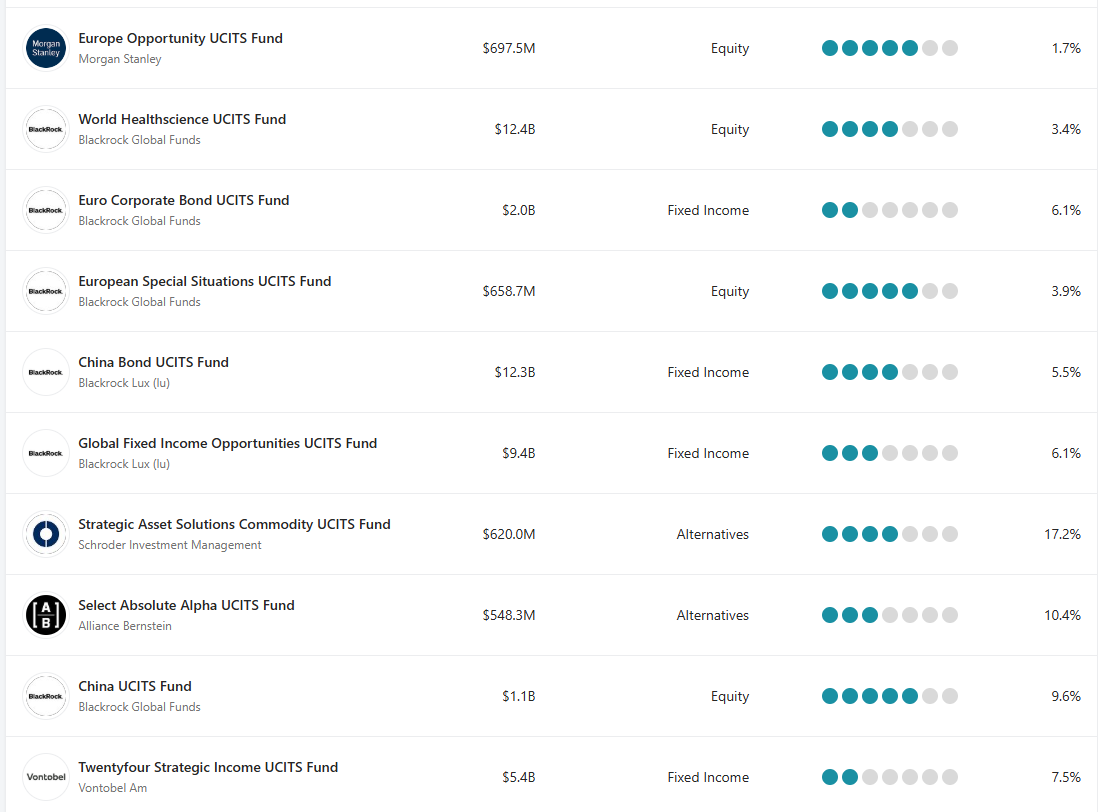
Through Vested’s Global Funds, Indian investors can now access 500+ actively managed UCITS funds from the world’s leading asset managers, spanning 50+ countries across equity, fixed income, and thematic strategies. These are the same institutional-grade funds that large global portfolios are built on, now accessible under India’s Liberalised Remittance Scheme with a minimum investment of $50.
This is not a curated shortlist or a handful of feeder funds. It is a full global fund shelf, managed by managers whose sole job is to navigate the complexities of international markets so you do not have to.
What Is the Best Asset Allocation Strategy for Indian Investors Who Want Global Exposure?
There is no single right answer, but a practical starting point is widely cited: allocating 15-20% of your total equity portfolio to international funds. This is enough to meaningfully reduce geographic concentration without overcomplicating the overall structure.
For Indian investors, the starting point matters less than the direction. Even a small, consistent allocation to global funds, built gradually over time, creates the diversification benefit that a domestic-only portfolio cannot.
Within that global allocation, the split across asset classes depends on your goals:
Global equity allocation works for long-term wealth building. Funds tracking global indices, developed market equities, or thematic strategies like AI and healthcare give you broad participation in international growth stories that Indian markets cannot capture.
Global bond allocation adds stability. International bond markets respond to different interest rate cycles and central bank policies. During periods of domestic market stress, a global fixed income allocation can dampen overall portfolio volatility in ways that Indian debt instruments simply cannot.
Thematic global funds suit investors who want conviction-based positions. Semiconductors, renewable energy, global technology, and healthcare innovation are themes that play out across multiple geographies. A thematic UCITS fund concentrates your exposure to these trends with professional management.
The combination of these within a structured global allocation is what turns a good portfolio into a resilient one.
Why UCITS-Structured Global Funds Are the Smarter Choice for Indian Investors
Not all international funds are structured equally. The way a fund is domiciled has real consequences for taxation, cost, and estate planning. This is where UCITS funds deserve specific attention.
UCITS stands for Undertakings for Collective Investment in Transferable Securities. It is a European regulatory framework. UCITS funds are domiciled primarily in Ireland or Luxembourg and managed under EU investor protection standards. All Global Funds on Vested are UCITS funds — managed by firms like BlackRock, Goldman Sachs, Fidelity International, Morgan Stanley, PIMCO, Vanguard, and Franklin Templeton.
Here is why the structure matters for Indian investors specifically.
No US estate tax exposure. If you hold US-listed stocks or US-domiciled ETFs as an Indian resident, US estate tax can apply to your assets on death. The exemption threshold for non-US residents is only $60,000, and the tax rate can reach 40% of total asset value. There is no India-US estate tax treaty to fall back on. UCITS funds are legally domiciled outside the US. They are not considered US-situated assets. The estate tax simply does not apply. The wealth you build passes to your family intact. This is why Global Funds on Vested are specifically designed to help protect your wealth from US inheritance tax — and why they are particularly relevant for HNIs and UHNIs whose US-listed holdings may already exceed the $60,000 threshold.
Lower dividend withholding at the fund level. Ireland-domiciled UCITS funds benefit from the US-Ireland tax treaty, which caps dividend withholding at 15% at the fund level. If you hold US ETFs directly, you face up to 25% withholding as an Indian investor. That difference compounds significantly over long holding periods.
Accumulating share classes for tax deferral. Many UCITS funds offer accumulating (Acc) classes, where dividends are automatically reinvested into the fund rather than distributed. No dividend is paid out to you, so no annual dividend tax is triggered in India. Your capital compounds inside the fund, uninterrupted, until you eventually sell. At that point, if you have held for more than 24 months, you pay long-term capital gains tax at 12.5%. That is your only tax event.
This structure is materially more efficient than holding distributing funds or direct US securities for most long-term Indian investors.
Who Should Invest in Global Funds?
Global funds are not a niche product for a specific type of investor. The need for international diversification cuts across experience levels and portfolio sizes.
Beginners get a professionally managed, globally diversified entry point without having to research every market individually. Funds managed by BlackRock, Goldman Sachs, and Fidelity do the heavy lifting. You start your global diversification journey with expert management from day one.
Experienced investors who already hold US stocks or ETFs can use global funds to hedge and diversify existing portfolios. Your US equity is one piece. Europe, Asia, emerging markets, global bonds, and thematic strategies are the rest. Global funds fill the gaps without requiring separate accounts or complex management.
HNIs and UHNIs benefit most directly from the UCITS estate tax advantage. Any Indian investor holding more than $60,000 in US-listed assets faces potential US inheritance tax exposure of up to 40%. Shifting to UCITS-structured global funds eliminates that structural liability and enables efficient, long-term wealth transfer to the next generation.
How Do Global Funds Fit Into a Long-Term Portfolio Strategy?
The question of portfolio allocation with global funds comes down to three things: your current concentration, your time horizon, and your goals.
If your portfolio is India-heavy, global funds reduce geographic concentration risk. India is a strong long-term growth story, but it is one story. Over-concentration in any single market, even a growing one, creates avoidable risk. A 15-20% global allocation is a reasonable hedge without disrupting the overall portfolio.
If you already invest in US stocks or US ETFs, your international exposure may be narrower than it looks. You have US equity. But you may be missing Europe, Japan, emerging markets, global bonds, and thematic strategies. With 500+ funds across 50+ countries on Vested, you can build genuine global exposure without managing each allocation separately.
If you are building long-term wealth for wealth transfer, the UCITS structure is especially relevant. The combination of no US estate tax exposure, accumulating share classes that defer Indian dividend tax, and Vested’s tax reporting infrastructure makes global funds a structurally efficient vehicle for multi-generational wealth planning.
On time horizon: global funds reward patience. The rupee has depreciated against major global currencies over most long periods, which means USD or EUR-denominated global assets provide a structural hedge that builds quietly in the background. For investors with a 5-10 year view, this matters considerably.
How to Invest in Global Funds from India Through Vested
Investing in global funds from India is done under the Reserve Bank of India’s Liberalised Remittance Scheme (LRS), which allows Indian residents to remit up to $250,000 per financial year for overseas investment. Vested’s Global Funds are offered through VF Securities Inc. (member FINRA/SIPC), a US-registered broker-dealer, making the entire process fully compliant with Indian regulations.
Because you invest directly into UCITS-structured funds rather than through domestic feeder funds, your access does not depend on domestic mutual fund overseas limits. As long as you are within your individual LRS allowance, you can invest consistently.
On Vested, the process is straightforward. After a digital KYC and LRS declaration, you can browse 500+ global funds across equity, fixed income, and thematic strategies managed by BlackRock, Goldman Sachs, Fidelity International, Morgan Stanley, PIMCO, Vanguard, Franklin Templeton, and more. You can start with as little as $10. There are no lock-ins and no entry or exit loads.
Once invested, everything sits in one dashboard alongside your US stocks and ETFs. Vested provides consolidated tax documents, which simplifies reporting under Indian tax regulations without manual reconciliation across platforms.
View all available Global Funds
How Are Global Funds Taxed in India?
For Indian residents, gains from global funds are taxed as foreign fund investments, not as domestic equity mutual funds.
Short-term capital gains on holdings of less than 24 months are taxed at your applicable income slab rate. Long-term capital gains on holdings of 24 months or more are taxed at 12.5% without indexation.
For accumulating UCITS funds, no dividend income is distributed during the holding period, so no annual dividend tax is triggered. Tax is deferred entirely to the point of sale.
As noted above, UCITS-structured global funds do not attract US estate tax because they are not US-situated assets. This is a significant planning advantage for investors with larger portfolios.
The Bottom Line on Global Funds in Long-Term Asset Allocation
Long-term asset allocation for Indian investors has traditionally meant a mix of domestic equity, fixed income, gold, and real estate. Global funds add a dimension that this combination cannot provide: genuine geographic diversification across 50+ countries, access to global growth themes managed by the world’s biggest fund managers, currency hedging against rupee depreciation, and a tax-efficient UCITS structure that protects wealth across generations.
With 500+ actively managed funds from BlackRock, Goldman Sachs, Fidelity International, Morgan Stanley, PIMCO, Vanguard, and Franklin Templeton now accessible through Vested under LRS from $10, the barriers that kept Indian investors out of global markets have largely been removed.
The question is no longer whether to include global funds in a long-term allocation strategy. It is how much, and how soon.
Start building your global portfolio on Vested. Explore 500+ international UCITS funds managed by the world’s biggest asset managers across 50+ countries. Invest from $10 with no lock-in and no entry or exit loads.
Start Investing
View Fund Details
Investment Disclaimer: Global Funds are offered through VF Securities, Inc. (member FINRA/SIPC). Investing in mutual funds involves risk, including possible loss of principal. Past performance does not guarantee future results. The fund managers mentioned are a representative sample and are not meant to be a recommendation. Tax treatment may vary based on individual circumstances and is subject to change. Please consult your independent tax advisor before making any investment decisions.