






Many think the hardest part of global investing from India is stock selection. In reality, that is only half the challenge.
The bigger challenge is staying informed. Because of the difference in market hours. US markets operate when India is asleep. So, most investors miss most of the price action coming from earnings announcements, Federal Reserve decisions, economic data releases, or major global events. By the time Indian investors wake up and react, all the news has already been factored into stock prices.
That’s what makes global investing difficult. To help address these challenges, Vested’s managed portfolios let investors access professionally built baskets of US stocks and ETFs based on a theme, strategy, or risk profile.
Understanding Vested Managed Portfolios
Think of managed portfolios as a pre-planned travel itinerary. Instead of planning every detail yourself, an expert creates the plan based on your goals, whether that’s adventure, luxury, or budget travel.
Similarly, investment specialists handle the research, portfolio construction, and ongoing monitoring, packaging everything into ready-to-invest baskets.
For example, if you want exposure to the space industry, you do not need to research and compare individual companies. Through the Vested app, you can invest in a Space Tech-themed managed portfolio that provides exposure to the sector through a single investment.
The portfolios are developed and tracked by Vested’s research team. You can review holdings, historical performance, risk levels, and portfolio objectives before investing. Instead of building your own portfolio from scratch, you can invest in one that has already been researched and structured for a specific objective.
Now that you understand what managed portfolios are, let’s explore why you might consider them on Vested.
Why Invest in Managed Portfolios on Vested
The following are the benefits of investing in managed portfolios on Vested:
Access to US stocks and ETFs
Many of the global leaders in technology, defence, space, healthcare, and advanced manufacturing are listed and found only on US exchanges. Managed portfolios provide exposure to these companies without requiring investors to build a portfolio stock by stock.
Theme-based global investing
During a megatrend, it’s hard to tell which companies will win and at what stage. Themes like AI, cybersecurity, defence technology, or clean energy move in phases- early innovators, mid‑cycle adopters, and late‑stage leaders.
Managed portfolios solve this by investing across a basket of stocks and ETFs, so you don’t have to guess the winners of each stage.
Professionally managed portfolio structure
Portfolio construction involves deciding which assets to include, how much weight to assign to each holding, and when to rebalance. In managed portfolios, experts follow the portfolio construction rules to design the structure and simplify the process.
Easier than selecting individual US stocks
Individual stock picking sometimes becomes a very time-consuming process. You have to spend time researching companies, reading earnings reports, and understanding the industry dynamics before investing in stocks. Managed portfolios simplify the process for you. The portfolios include the best stocks of the theme and strategy, carefully selected by investment professionals, so you don’t have to spend hours on research and filtering options.
How to Choose the Right Managed Portfolio
Not all managed portfolios are built with the same objective. Some are built for growth, some for diversification, and some for income generation. So, you need to start by asking the right question to yourself- what do I need from the portfolio?
If you’re looking for steady and long-term growth, investing in diversified portfolios makes more sense. These portfolios typically spread investments across different asset classes and geographies, reducing concentration on a single sector or theme.
If your risk appetite is higher and you are aiming for high growth, you can consider thematic portfolios. These portfolios provide targeted exposure to megatrend stocks, such as defense, clean energy, artificial intelligence, etc. However, the volatility of such portfolios is also higher.
That being said, time horizon matters the most. Theme-based portfolios often require patience, as structural trends can take years to play out. They are not ideal for short-term investment horizons.
Finally, don’t invest in managed portfolios just by looking at the past returns. It’s difficult to tell whether the momentum will continue or not. Instead, focus on whether the portfolio’s objective, risk profile, and holdings all align with your own financial goals.
How to Start Investing in Vested Managed Portfolios
Starting to invest in Vested’s managed portfolio is straightforward. Here’s the step-by-step guide to the process.
Step 1: Sign up on Vested
Download the Vested Finance app from the App Store and create an account.
Step 2: Complete KYC Verification
Complete the KYC verification process by submitting the required documents, such as your PAN card, AADHAAR, and identity proof.
Step 3: Add Funds
Once your account is approved, add funds through net banking. This is done under the Liberalised Remittance Scheme (LRS), which allows Indian residents to invest overseas. Your funds are converted from INR to USD before being invested in global securities.
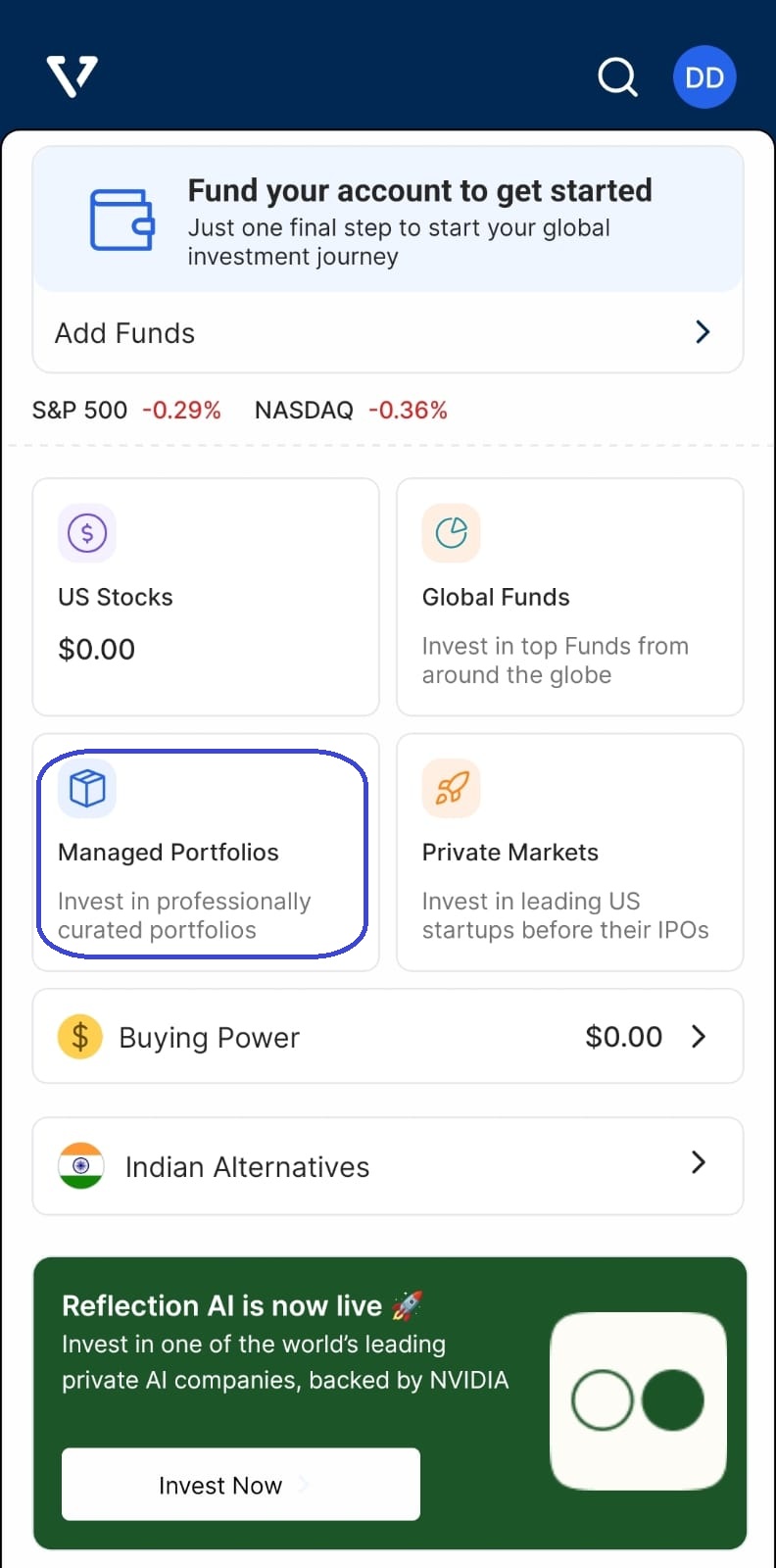
Step 4: Go to Managed Portfolios
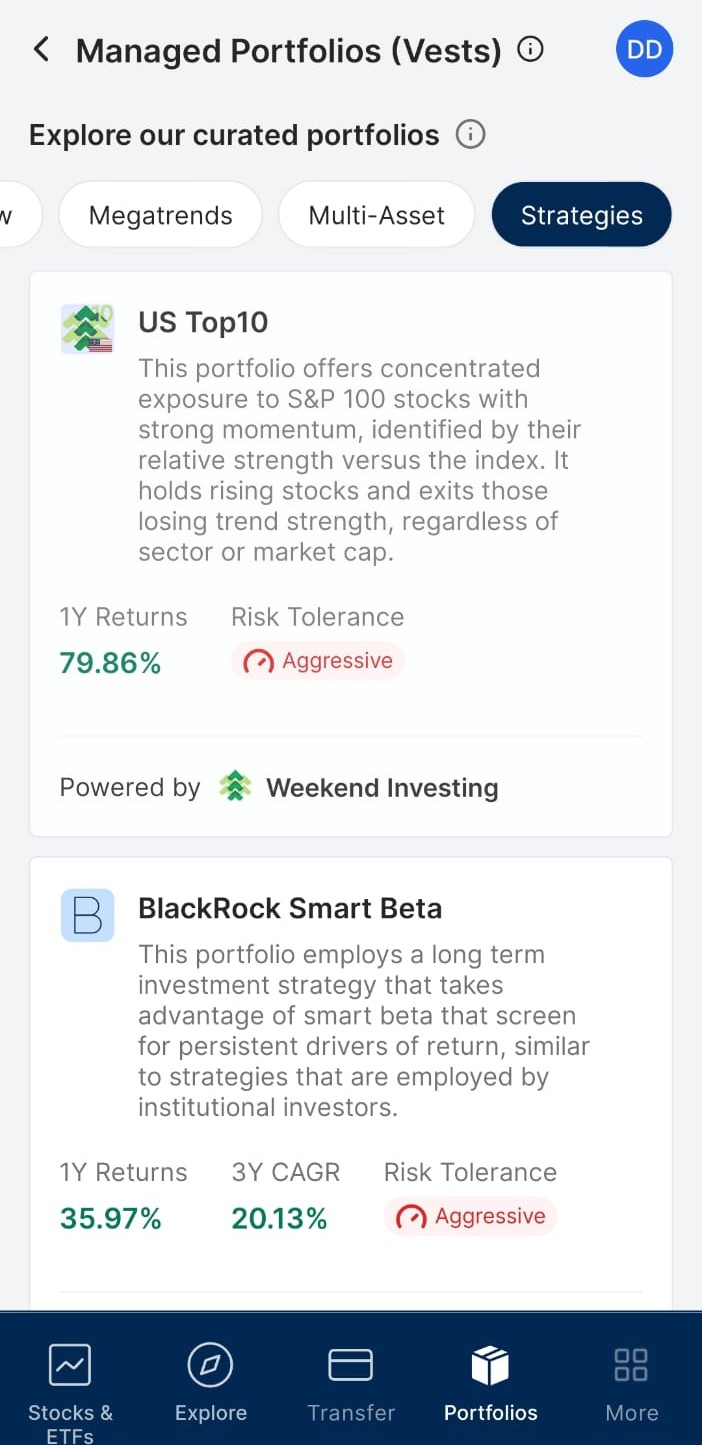
After adding funds to your account, navigate to the Managed Portfolios section within the Vested platform. You will find three different managed portfolio categories- Megatrend, Multi-Asset, and Strategies.
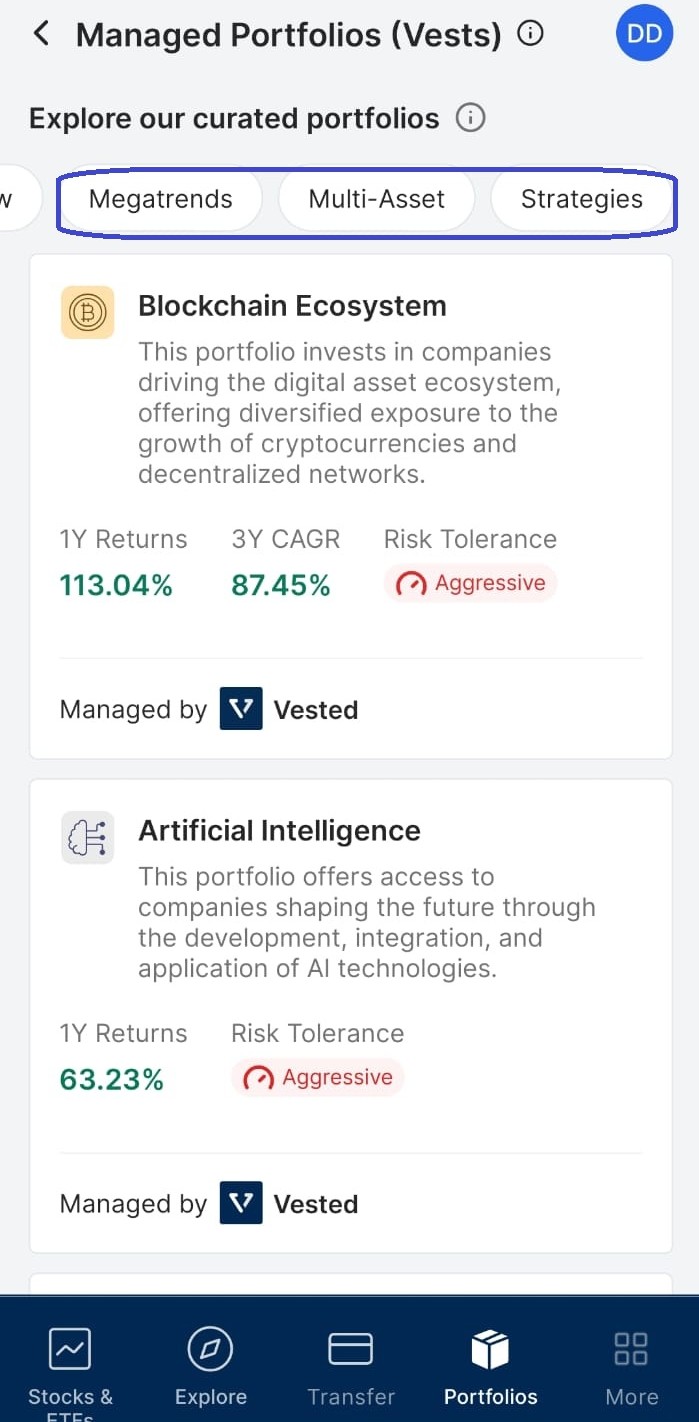
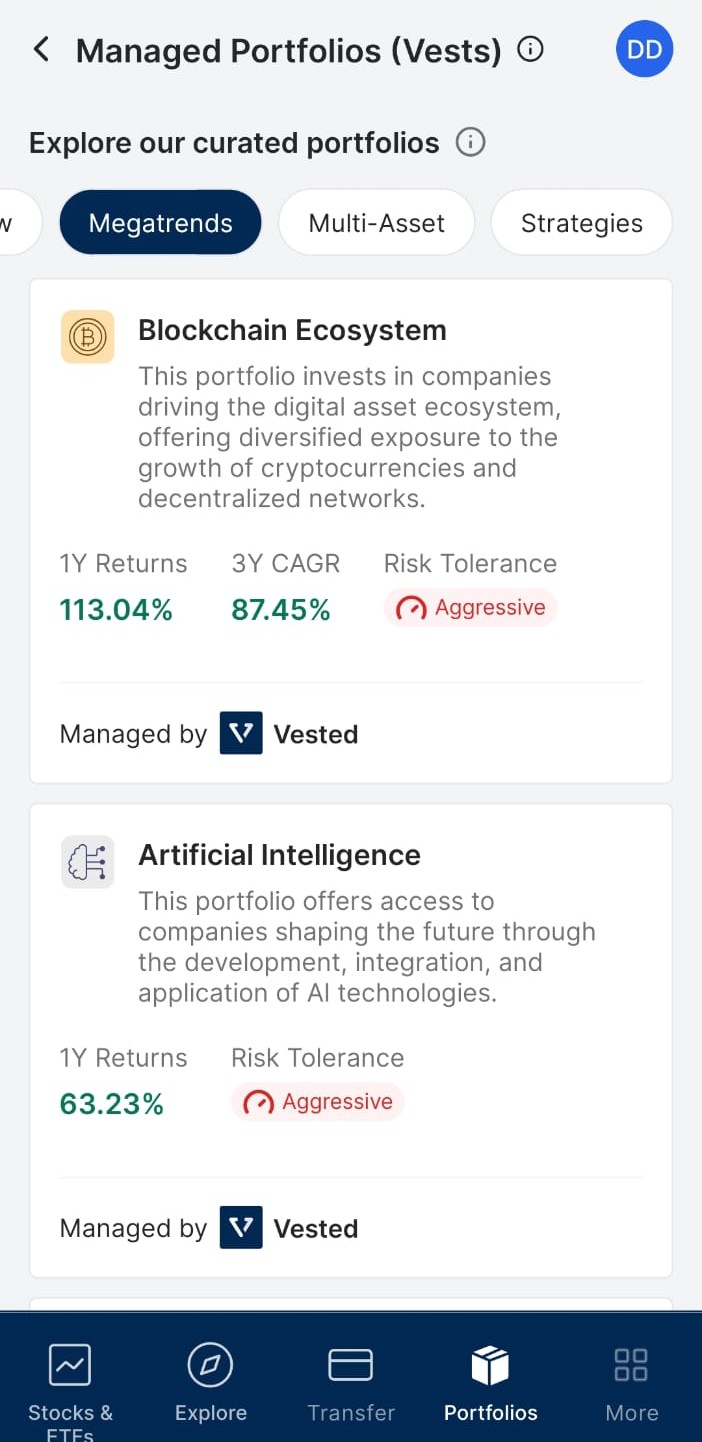
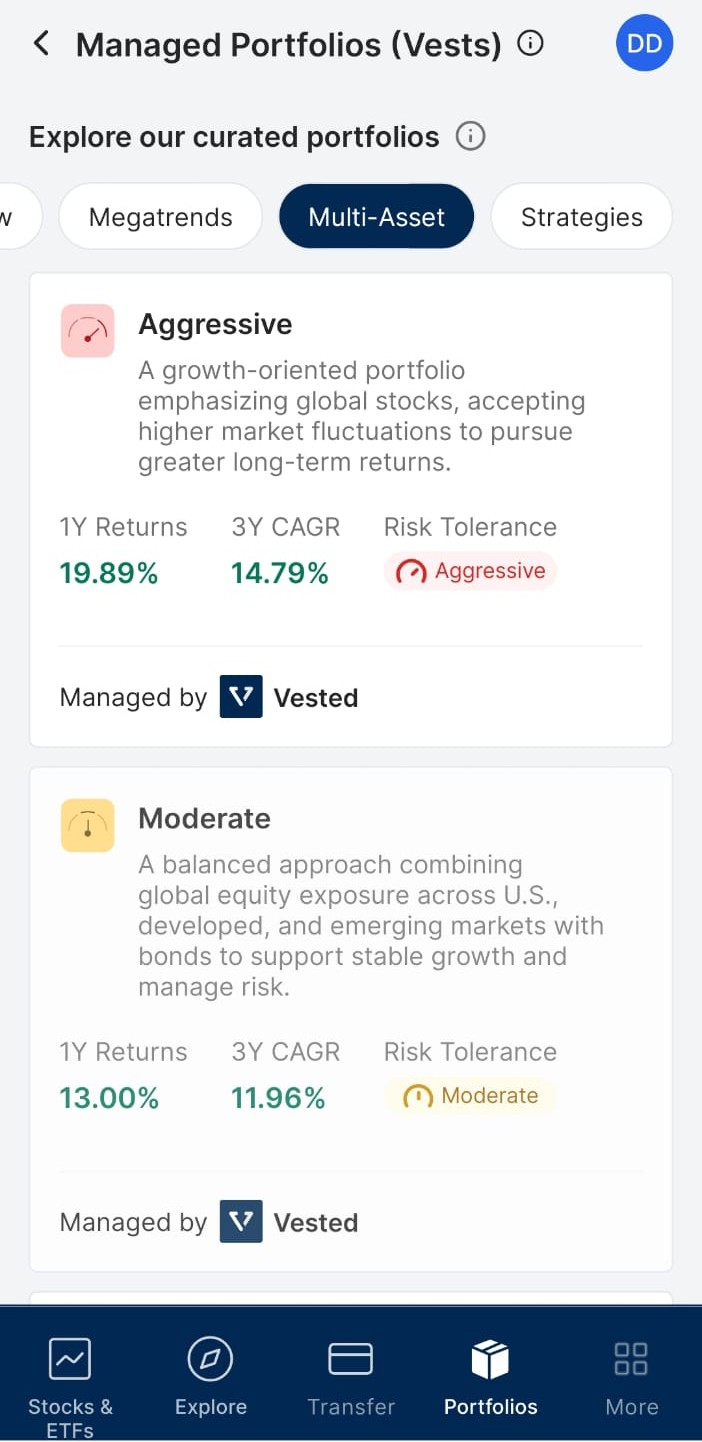
Megatrend portfolios focus on big, long-term shifts like AI, clean energy, space, and defence that are reshaping how the world works. Instead of picking individual winners, you get a ready mix of companies positioned around a single powerful theme. Multi-asset portfolios are built for balance, combining equities, bonds, and global diversification depending on your risk appetite.
And, strategy portfolios follow a rule-based investment approach rather than a theme, focusing on factors like quality, growth, and momentum factors. It’s less about “what’s trending” and more about how the portfolio is systematically built over time.
Explore all the categories to find the right portfolio for yourself.
Step 5: Compare Available Portfolios
Compare the available portfolios in each category. Review portfolio objectives, investment themes, holdings, risk category, historical performance, and management fees.
Step 6: Choose a Suitable Portfolio
Choose a suitable portfolio that matches your financial goals and risk appetite, and proceed by entering the investment amount and confirming the investment.
Investing should not be a one-time activity. Monitor portfolio performance periodically and review whether the portfolio still aligns with your goals. If you’re notified of any suggested rebalancing, evaluate the recommendation and decide whether to proceed or decline.
Important Checklist Before You Invest in Managed Portfolios
Every managed portfolio is created based on a theme and strategy. As a result, each managed portfolio has a different return profile. A checklist to ensure you invest in the right portfolio.
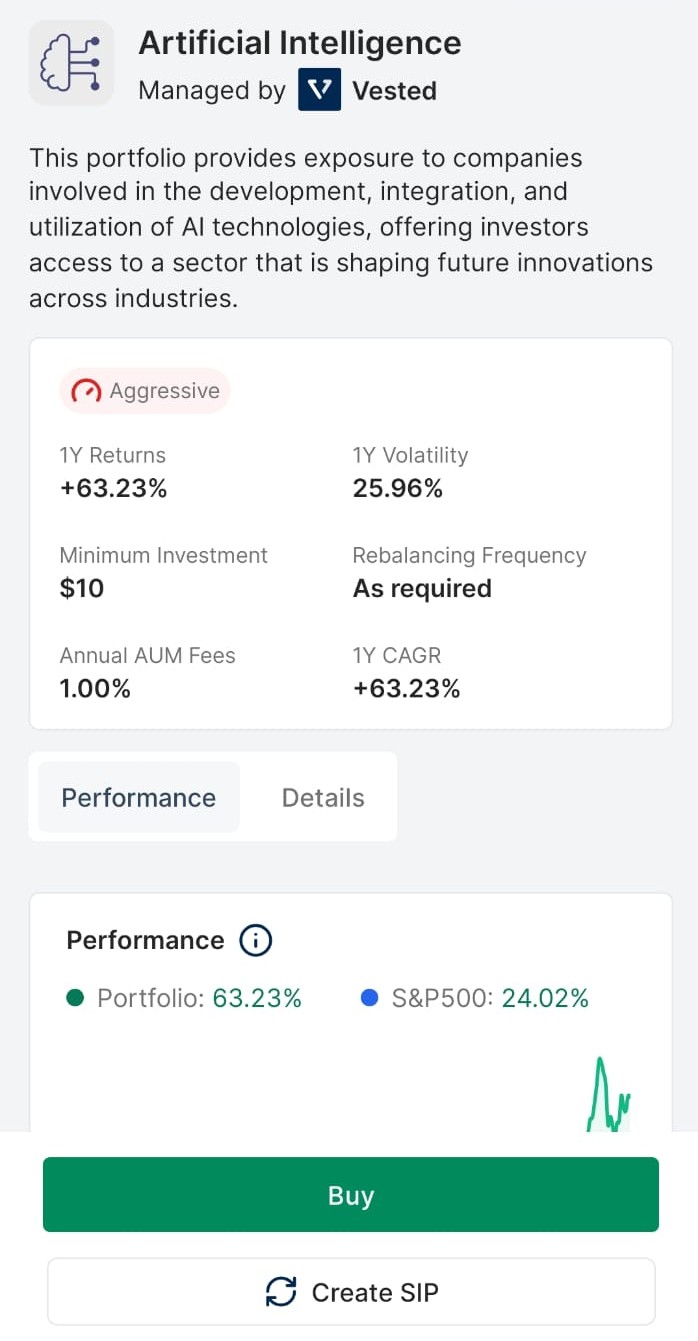
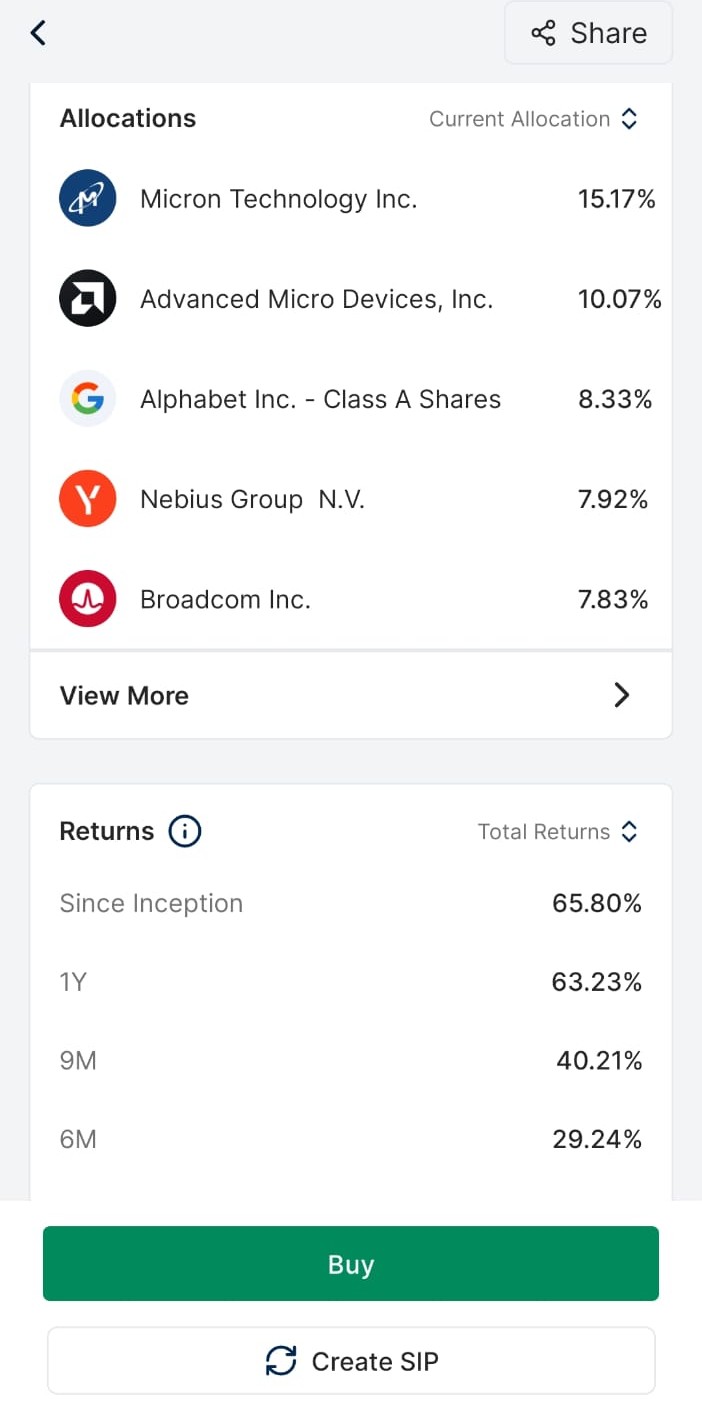
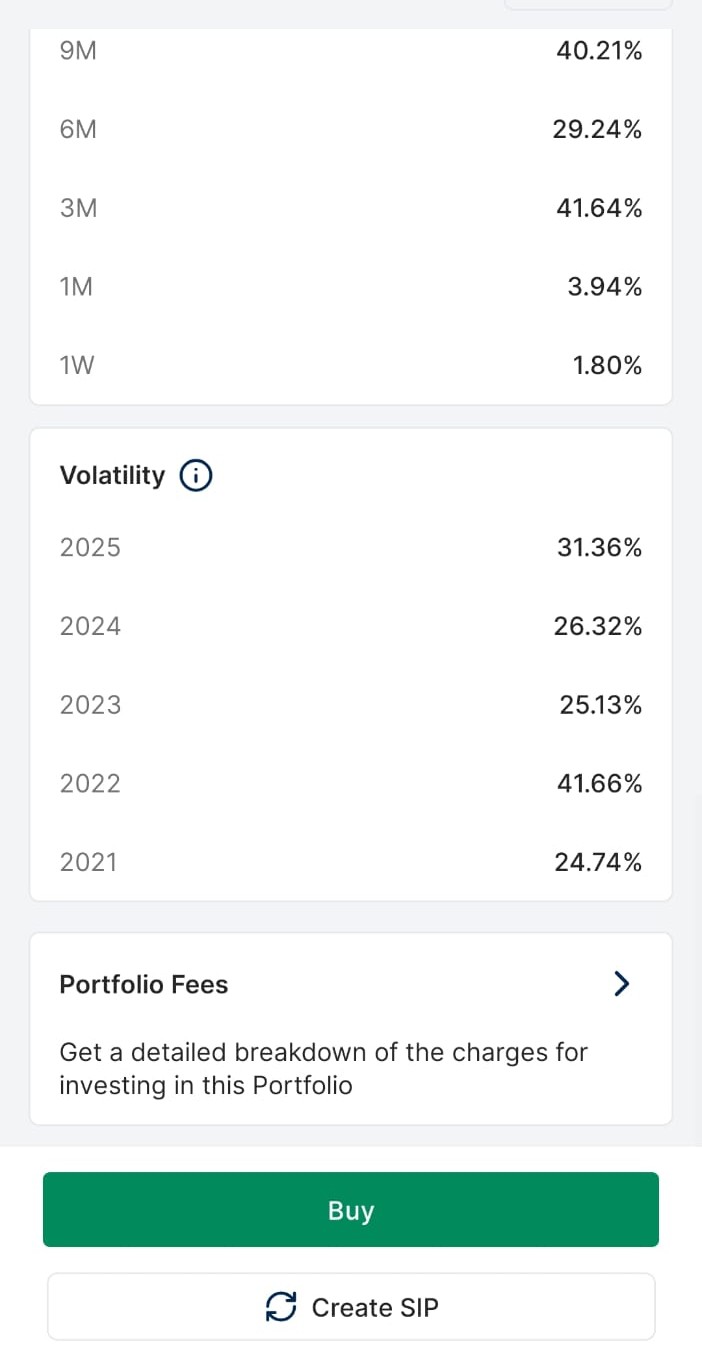
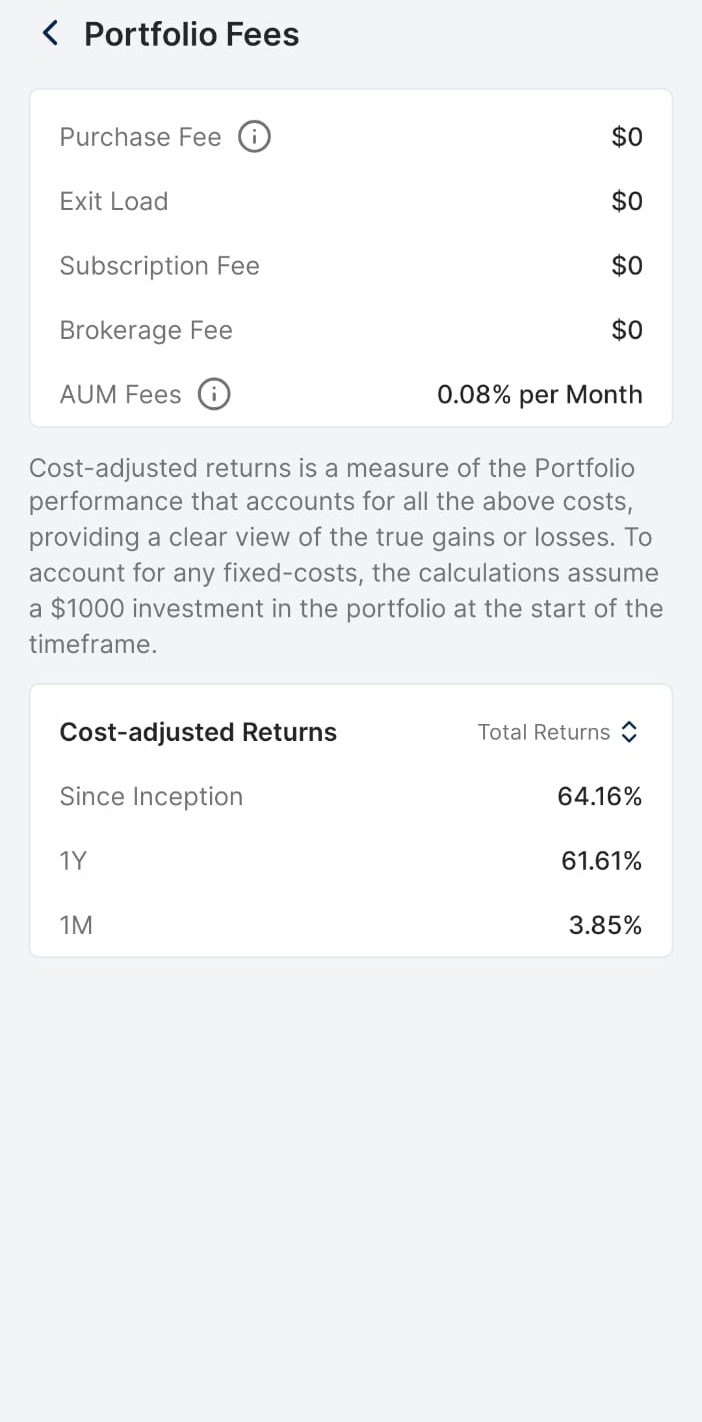
The screenshots above are from Vested’s Artificial Intelligence managed portfolio from the megatrend category. They provide several important details that can help you evaluate whether the portfolio aligns with your investment goals or not.
Portfolio Objective: The portfolio page explains the strategy behind the portfolio, including the sectors and companies it invests in. It also highlights key metrics such as historical returns and the portfolio’s risk profile. You can also check how the portfolio has performed in comparison to the broader market.
Portfolio Allocation: The second screenshot shows the individual stocks held in the portfolio and their respective weightings. Investors can also review the portfolio’s performance across different time periods.
Risk Level: The third screenshot displays the portfolio’s historical volatility across calendar years. For example, the portfolio’s volatility was 31.36% in 2025, indicating that its returns experienced relatively large fluctuations during the year. Higher volatility can lead to stronger gains during market rallies, but it also increases the risk of sharper declines during market downturns. If you are not comfortable with such large fluctuations, you can consider portfolios from the multi-asset category.
Fees and Costs: The fourth screenshot provides a breakdown of the costs associated with investing in the portfolio. It includes information on management fees, monthly charges, and cost-adjusted returns, helping investors understand the impact of fees on overall performance.
Wrapping Up
Investing in a managed portfolio through Vested Finance is a simple way to start global investing from India without having to build a US stock portfolio from scratch.
Not only do you save time on researching dozens of companies and understanding the market dynamics, but you also gain access to professionally curated portfolios built around specific themes, strategies, or diversified asset allocations.
That said, always evaluate portfolio objectives, risk levels, fees, taxation, and currency exposure risk before investing. Like with any market-linked investment, returns are not guaranteed, and portfolio performance can fluctuate over time.
If you are exploring how to start global investing in India, managed portfolios can be a useful starting point, particularly for investors who want diversified exposure with a structured investment approach.
Frequently Asked Questions
What are Managed Portfolios on Vested?
Managed Portfolios are professionally curated baskets of US stocks and ETFs designed around a theme, investment strategy, or diversified allocation model. For example, AI, Clean Energy, Blockchain, Space Tech, Global Multi Asset, Ageing, etc.
Are Vested Managed Portfolios risk-free?
No. Managed portfolios invest in market-linked securities, which means returns can fluctuate and losses are possible.
What should I check before investing?
Review the portfolio objective, holdings, risk level, fees, taxation, and potential currency conversion impact before making an investment decision.
