


Key Takeaways
- When you sell your RSU shares, you can bring the money to India within 180 days or reinvest it in foreign financial securities.
- When you move the money to Vested Finance, it remains in dollars. So, you don’t have to pay extra for currency conversion.
- The LRS limit doesn’t apply to transfers within the US financial system.
- Keep records of sales and transfers for foreign asset disclosure or tax filing.
- When managing overseas sales proceeds, it’s important to consider the key rules and applicable FEMA conditions.
- You can transfer cash or shares. A share transfer does not trigger a sale, but your tax duties stay the same.
| Direct answer: You can transfer your RSUs from Charles Schwab to Vested Finance in two ways: a cash transfer (sell the shares and wire the USD proceeds via the Schwab Equity Awards Center) or an in-kind share transfer via ACATS (move the shares as-is). Either way you do it, you’re still operating entirely within the US system so neither will use your LRS limit or attract TCS as long as you reinvest or repatriate within 180 days of the sale under FEMA. |
If you work for a US company in India, RSUs may be part of your CTC. It is the most important component of your package because it vests over time and contributes to wealth creation.
But the question is, once you sell the RSUs or vested shares, where should you keep the money?
Here is why it matters. As per FEMA rules, you have 180 days from receiving your sale proceeds to either bring the money to India or reinvest it in eligible foreign securities. If you bring it home and later want to invest in the US again, you must convert dollars to rupees and back, which means extra costs and paperwork.
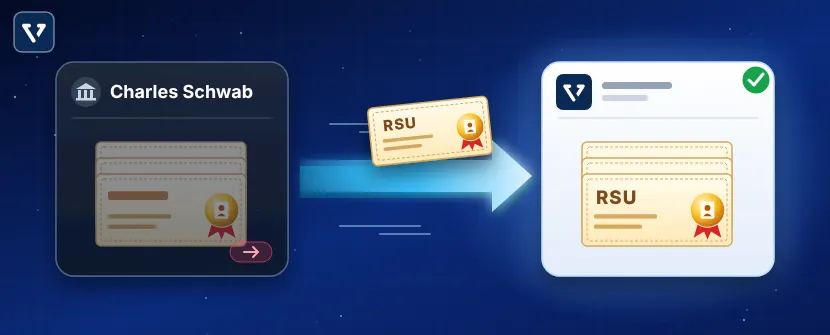
There is a simpler route. You can move your proceeds straight from Charles Schwab to Vested Finance and reinvest them in foreign securities. This guide shows you how.
How can you transfer RSUs from Charles Schwab to Vested Finance?
There are two options available, and you can choose based on whether you want to keep your shares or transfer the cash from a sale.
| Transfer method | How it works | Best suited for |
| Cash transfer | Sell your vested shares and transfer the proceeds to Vested Finance | Investors who want to invest the cash in other securities |
| Share transfer | Move vested shares to Vested Finance without selling them | Investors who want to continue holding their shares |
Before you start
Open the Vested Finance app and go to Add Funds, then select ESOP/RSU. Find Charles Schwab in the list and download the guide. It contains the beneficiary details you need. If Schwab does not appear, tap General Instructions for wire details that work with any broker. Keep these details handy, because you must enter them exactly.
Option 1: Transfer cash proceeds from Charles Schwab to Vested Finance
If you have sold your vested shares, you can transfer the cash proceeds to your Vested account.
1. Log in to your Charles Schwab account and open the Equity Awards section.

2. Select Cash Transfer and enter the amount you want to transfer. Select the wire transfer option to move the funds to your Vested-linked receiving account.


3. Select Domestic wire and enter the recipient’s banking details. Make sure to cross-check the account number, routing number, and other required information before proceeding.


4. Enter the beneficiary details provided in the PDF you can download after logging in to your Vested account, and click Continue at the bottom of the page.

5. Review the transfer details and then submit your request.

6. A cash wire transfer takes 3–5 business days. Keep checking your Charles Schwab account and Vested account for updates.


Option 2: Transfer Vested shares directly to Vested Finance
What is ACATS?
The Automated Customer Account Transfer Service (ACATS) is the standard system that US brokers, including Charles Schwab, use for in-kind transfers. Usually, you need to provide a signed transfer authorization and a recent account statement. The process takes about 5 to 10 business days. If ACATS is not available for a certain holding, Schwab may use the Direct Registration System (DRS) or a DTC transfer instead. Check with Schwab to confirm which method applies before you begin.
If you don’t want to sell your shares and keep them, you may transfer your holdings directly to Vested Finance through an in-kind asset transfer.
An in-kind transfer moves your shares between brokerage accounts without selling them. This means the transfer does not include capital gains tax. However, your sending broker may charge a fee.
Steps to initiate a share transfer:
- Log in to your Vested account and search for Transfer & Wallet.
- Choose the transfer type and select your current broker, Charles Schwab.
- Enter the required information, such as account number, name, and e-signature, and then submit the request.
Note: The transfer can take 1-10 business days.
Things to keep in mind when transferring RSUs
- Watch the 180-day window: Under RBI rules, you can reinvest the RSU sale proceeds in other foreign securities without bringing the money to India. However, the reinvestment should be done within 180 days.
- No TCS limit: When transferring USD from your Charles Schwab account to your Vested account, TCS and the LRS limit do not apply.
- Check transfer fee: Your current broker may charge a transfer fee. Make sure to check the applicable charges before proceeding. If there are any charges involved, make sure to keep enough balance in your account to make the transaction successful.
- Keep your records: Keep a record of your RSU sale confirmations, brokerage statements, and transfer receipts. You might need these documents when filing your income tax returns and foreign asset disclosures.
Does transferring RSUs change your cost basis or tax treatment?
No. Moving shares through ACATS, DRS, or DTC, or transferring cash proceeds to Vested, is just a change in custody, not a sale. Your original vesting-date acquisition cost and holding period stay the same, so your LTCG eligibility is not reset. If Schwab already withheld US tax at vesting, you can claim credit for it in India under the India-US DTAA by filing Form 67 before your ITR.
Conclusion
RSUs can build wealth over time, but managing the proceeds efficiently is important. If you plan to remain invested in foreign markets, transferring eligible USD proceeds directly from Charles Schwab to Vested Finance may help reduce unnecessary currency conversion costs and simplify reinvestment.
You can also explore an in-kind transfer if you want to move eligible shares without selling them. Before proceeding, check the applicable FEMA requirements, broker fees, transfer eligibility, and tax obligations to choose the route that suits your financial goals.
Source:
https://vestedfinance.com/blog/us-stocks/rsus-a-comprehensive-guide-to-restricted-stock-units/
Frequently Asked Questions
Can RSUs be transferred to vested?
Transferring RSUs depends on the vesting status. For example, you can transfer the vested shares as if you owned the company shares. On the other hand, you can’t transfer unvested shares because you don’t own the company shares yet.
How to avoid capital gains tax on RSUs?
It is not possible to avoid capital gains tax on RSUs, but you can reduce it.
- You can sell your shares right after they get vested.
- Section 54F of the IT Act, 1961, you can save long-term capital gains tax from selling shares by investing the net sale proceeds into a residential house in India.
- You can offset gains by selling your investment that is underperforming. This is called tax-loss harvesting.
Are RSUs taxed twice in India?
There are two tax stages involved:
- When the company’s shares vest, you have to pay income tax on the shares’ fair market value.
- While selling your shares, you have to pay capital gains tax on the profit above the vesting value.
Do RSUs count as income when they vest?
Yes, RSUs are considered taxable income the moment they vest. Your employer deducts TDS on it, and the amount gets reflected on your Form 16 and Form 12BA.
Do RSU shares expire?
No, RSU shares do not expire even after leaving the company. However, if you leave the company before they vest or meet the timeline, you will lose them.
Is ACATS or a wire transfer better for moving RSUs from Schwab to Vested?
It depends on what you want to keep. Choose ACATS (in-kind transfer) if you want to keep holding the same shares without selling them. If you have already sold and want to reinvest in different securities, use a cash or wire transfer. Both options stay within the US financial system, so neither affects your LRS limit.
Will an in-kind transfer from Schwab to Vested reset my cost basis or holding period?
No. An ACATS, DRS, or DTC transfer is not a sale, so your original vesting-date cost basis and holding period stay the same for Indian capital gains tax purposes.