






Last week, AMD did something it has never done in its 56 year history. It posted a record quarter.
Revenue came in at $11.5 billion, up 50% from a year ago. Data centre revenue, the business that sells chips to AI companies, more than doubled to $6.7 billion. Earnings beat what Wall Street expected. Guidance for the next quarter came in above estimates too. On any normal day, this is the kind of report that sends a stock soaring.
Except AMD’s stock didn’t soar. It dropped as much as 10% the very next day.
So what went wrong? Nothing, actually. Nothing in AMD’s own numbers, anyway. The damage came from an entirely different earnings call happening the same evening, hundreds of kilometres away.
The other call that mattered more
Tuesday, August 4th, was also the night SpaceX reported its first ever results as a public company. Elon Musk’s rocket and satellite business had gone public just weeks earlier, and investors were watching closely.
The numbers were solid. Revenue of $7.8 billion, up 92% year on year. But somewhere in the middle of the call, Musk said something that had nothing to do with rockets and everything to do with AMD’s stock price.
He said SpaceX had decided to build its AI infrastructure exclusively on Nvidia’s Vera Rubin architecture going forward, calling it the best option available and confirming SpaceX would use no one else.
Just one word did the damage: exclusively. SpaceX wasn’t just buying more Nvidia chips. It was dropping AMD entirely.
That single line wiped out AMD’s after hours gains before most investors had even finished reading its earnings release. AMD stock, which briefly rose on its own strong numbers, reversed and fell as much as 10%. Nvidia, meanwhile, gained around 2 to 4%.
Why one customer could move the needle this much
Here’s the part that seems odd at first.
SpaceX was never AMD’s biggest customer. By some estimates, it made up a small fraction of AMD’s overall AI chip revenue. So why did losing it hurt so much?
Because AMD’s entire pitch to investors for the past year has been this: we are the credible alternative to Nvidia. Big AI buyers don’t want to be stuck depending on one supplier for chips that cost billions of dollars. AMD’s job was to be the backup option, the hedge, the company that keeps Nvidia honest on pricing.
SpaceX publicly choosing Nvidia and only Nvidia undercut that entire argument, live, in front of every investor watching. It didn’t matter that the dollar value was small. What mattered was the signal. If even a company as AI hungry as SpaceX won’t hedge with AMD, will anyone?
Adding to the sting, SpaceX and Nvidia also announced a partnership for something called Starmind AI1, a satellite designed to run AI computing directly in orbit, carrying Nvidia’s Rubin GPUs. It was a reminder that Nvidia isn’t just winning today’s data centre business. It’s winning the AI infrastructure of the future too, on Earth and now in space.
There’s a growth gap hiding underneath
The SpaceX headline wasn’t the only reason the market reacted the way it did. AMD’s stock had already run up nearly 130% for the year going into this earnings report, so expectations were sky high.
Look closely at the numbers, and there’s a real gap between the two companies.
In the most recent quarters before this earnings season, Nvidia’s data centre revenue was more than ten times the size of AMD’s equivalent business, and it was growing faster too, often at 70 to 85% year on year against AMD’s 34 to 39%.
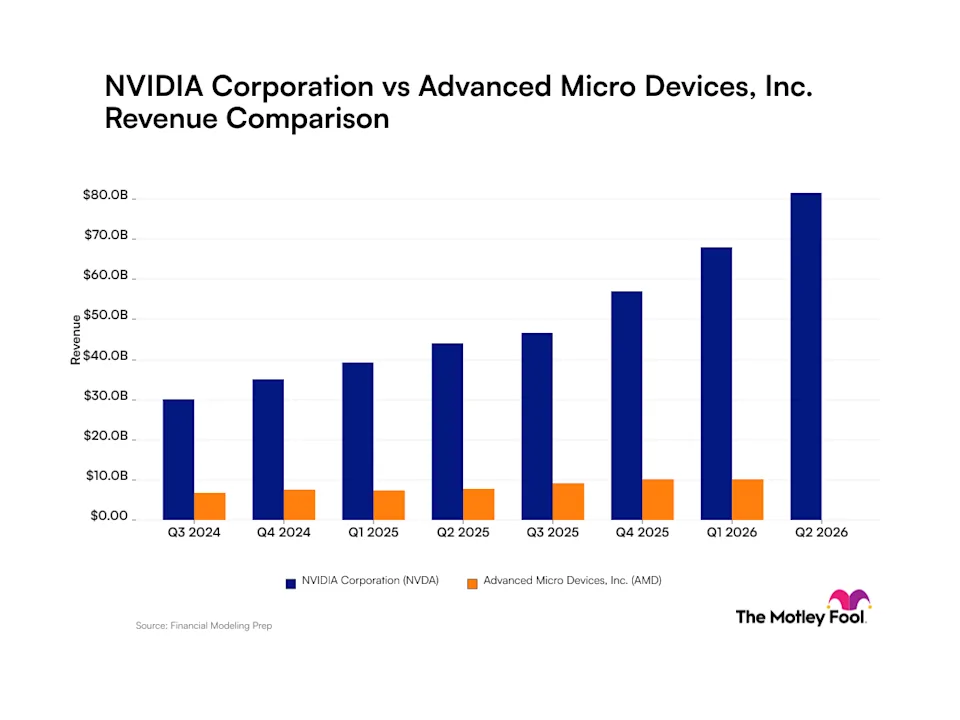
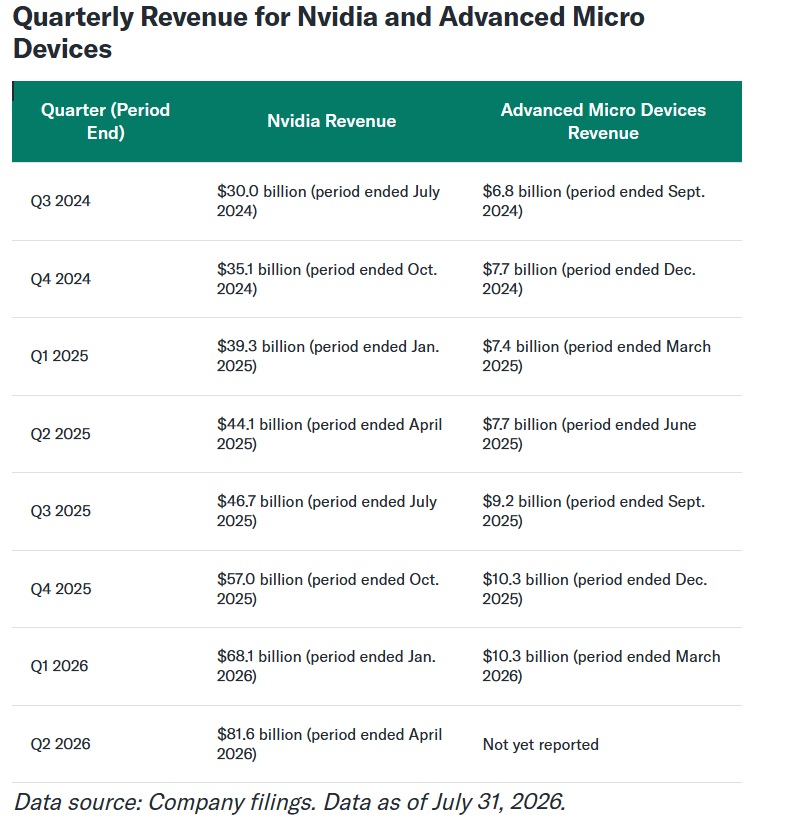
Nvidia’s profitability is also in a different league. Its net income margin has run near 72%, compared to roughly 14% for AMD.
Despite that gap, AMD’s stock had climbed far more than Nvidia’s over the past year, which means it was trading at a much richer valuation for a business growing more slowly. That combination, rich price tag plus slower growth, left AMD with very little room for error. A record quarter was expected. Anything less than a flawless story alongside it, and the market was always going to look for a reason to sell.
In other words, the SpaceX news gave investors a convenient reason to book profits on a stock that had already priced in a lot of good news.
Nvidia keeps adding wins, one customer at a time
Zoom out, and the SpaceX deal is just the latest in a long list of marquee customers choosing Nvidia. Nvidia shares climbed nearly 10% over the following month on the back of this news, while SpaceX stock itself fell more than 13% as investors grew cautious about its post IPO spending pace.
That divergence tells its own story. Nvidia doesn’t just benefit when it wins a deal directly. It benefits from the perception that every major AI player, eventually, ends up choosing it. Each new customer reinforces the idea that Nvidia’s chips are the default choice, making it harder for AMD, Intel, or anyone else to break in, even when their own numbers are strong.
The bigger picture
This episode says less about AMD’s fundamentals and more about how sentiment driven the AI trade has become. A single word from Elon Musk on an earnings call moved billions of dollars in market value within minutes, more than an actual record quarter did.
It also highlights something every investor tracking AI stocks should keep in mind. In this market, headlines about who a company sells to can matter just as much, sometimes more, than the financial statements themselves. AMD’s numbers were nearly perfect. Its story wasn’t, at least not for one evening.
Until then.
