






| Quick answer: Yes, Indian investors can invest in Taiwan stocks from India through platforms like Vested, via ADRs like Taiwan Semiconductor (TSM) or ETFs like iShares MSCI Taiwan ETF (EWT), subject to applicable LRS, tax and regulatory rules |
Taiwan is around 90 times smaller than India by area. Yet its stock market is worth more. That’s not by chance. It is due to Taiwan’s focused efforts to play a significant role in the technological change of the world.
Many of the chips and advanced electronic components manufactured in Taiwan are used in developing technologies of the future. As a result, Taiwan’s influence in the global economy has also increased.
It got reflected in the stock market as well. The Taiwan Weighted Index (TAIEX) has delivered over 25% returns in each of the last three years, and has jumped more than 50% in 2026 alone.
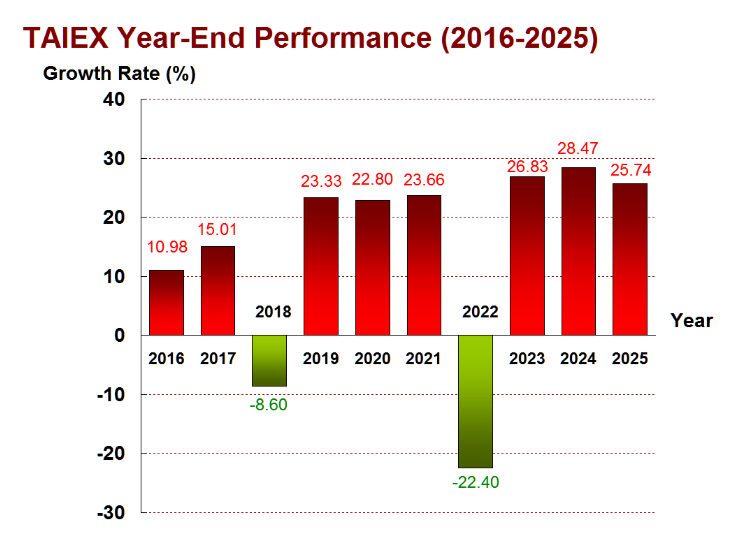
Source: Taiwan Stock Exchange
For Indian investors, Taiwan offers a compelling way to diversify beyond the US and domestic markets. In this article, we will discuss how to invest in the Taiwan market from India and the important things to keep in mind before investing.
Can Indians Invest in Taiwan Stocks
Yes, Indians can invest in the Taiwan stock market. However, unlike US stocks, direct access to Taiwan stocks is limited for retail investors. The simplest route is through international ETFs and global funds that invest in Taiwanese companies.
However, investments in foreign stocks are strictly regulated under the RBI’s Liberalised Remittance Scheme (LRS). It caps remittance at $250,000 per financial year to invest in foreign stocks, including Taiwanese stocks.
Ways to Invest in the Taiwan Market
There are multiple options through which you can gain exposure to the Taiwan market. While investing directly in Taiwan stocks from India is possible, but its not that straightforward. You have to comply with multiple regulations. The following are the easiest ways to gain exposure to the Taiwan market.
Taiwan Companies Listed in the US
One of the most direct options to invest in Taiwanese companies is through Taiwan ADRs listed on US exchanges.
ADRs or American Depository Receipts are shares of foreign companies listed on US exchanges and trade in US dollars. They can be easily bought and sold on Vested Finance. They are similar to common equity stocks of the company, excluding the voting rights.
Some of the most tracked Taiwan ADRs include Taiwan Semiconductor Manufacturing Company (TSMC), which trades on the NYSE under the ticker TSM, and United Microelectronics Corporation (UMC), which trades under the ticker UMC.
Disclaimer: The securities discussed in this article are for educational and informational purposes only and should not be construed as investment advice or a recommendation to buy or sell any stock.
Global UCITS Funds with Taiwan Exposure
If you prefer to invest in a diversified portfolio of top-performing stocks of Taiwan and other nations, you can consider global UCITS funds. These funds are domiciled in Europe and regulated under European Union rules. Many investors prefer them because they provide certain tax advantages and have an investor-friendly regulatory framework.
Examples of Taiwan-linked UCITS funds include:
- Asia Opportunity UCITS Fund from Morgan Stanley: This fund seeks long-term growth by investing in a select group of companies across Asia, excluding Japan. About 15% of its portfolio is allocated to Taiwan
- Emerging Asia UCITS Fund from Schroder Investments: This fund primarily invests in equities of companies in emerging Asian markets. It allocated 30% of the fund’s asset in Taiwan market.
- Global Technology UCITS Fund from BlackRock: This fund invests in companies around the world that are benefiting from technological innovation and advancement. The United States accounts for the largest share of the portfolio at nearly 73%, followed by South Korea and Taiwan.
- Global Technology UCITS Fund from Fidelity International: This fund invests in global companies focused on driving innovation and digital transformation. Its top holding includes TSMC and Microsoft, and Taiwan accounts for about 10% of the portfolio.
These funds typically invest across multiple Asian and global markets, including Taiwan. They are suitable for investors who wish to diversify across nations and industries while gaining exposure to Taiwanese businesses.
Compared to US-listed ETFs, UCITS funds are more tax-efficient for Indian investors. Many of these funds are available to Indian investors on Vested.
Taiwan-Focused ETFs
Another option is to invest in Taiwan-focused ETFs listed in the US. These funds hold a basket of Taiwanese stocks and offer diversified exposure to the country’s stock market through a single investment. Such as:
iShares MSCI Taiwan ETF: The fund provides diversified exposure to some of Taiwan’s largest and most influential companies. The ETF tracks the MSCI Taiwan Index and allows investors to participate in Taiwan’s technology and semiconductor-driven growth through a single investment.
Franklin FTSE Taiwan ETF: This ETF tracks a broad index of Taiwanese stocks, allowing investors to gain exposure to some of the country’s largest companies through a single investment. It is heavily weighted toward technology and semiconductor businesses.
Why Should I Invest in the Taiwan Market?
Taiwan accounts for less than 1% of global GDP, yet its stock market is valued more than 5-times its GDP. The reason is simple: Taiwan sits at the center of the global technology supply chain.
Home to the World’s Semiconductor Leader
For many investors, Taiwan begins and ends with Taiwan Semiconductor Manufacturing Company (TSM). The world’s largest contract chip manufacturer. According to Counterpoint Research, TSMC controlled 73% of the global semiconductor foundry market in the first quarter of 2026.
By investing in the Taiwan market, you can get direct exposure to a critical bottleneck in the global technology supply chain. Many of the big tech companies in the world depend on TSMC to expand their data center and artificial intelligence capabilities.
A Direct Play on the AI Boom
Rapid adoption of AI has skyrocketed demand for advanced semiconductors worldwide. According to Goldman Sachs, hyperscalers like Meta, Alphabet, Amazon, and Microsoft will spend $5.3 trillion on AI and data centres through 2030.
Taiwan is strongly benefiting from this trend. There, you can gain exposure to many of the companies supplying the infrastructure that powers this growth. The kind of opportunity that is hard to find in many other markets.
Technology Dominates the Stock Market
Taiwan is one of the most technology-focused markets in the world. Nearly 79% of the Taiwan Weighted Stock Index (TAIEX) is made up of the electronics sector.
In contrast, many other emerging markets are more heavily weighted toward financials, energy, or commodities, which are cyclical in nature. This makes Taiwan a unique destination for investors to gain from global technology growth.
Strong Export-Oriented Economy
Taiwan’s economy is highly integrated into global trade. The country’s export-to-GDP ratio is one of the highest globally. Driven largely by semiconductor exports. At the end of Q1 2026, the country’s exports-to-GDP ratio hit 80.24%, up from 60% at the start of this decade.
This export-driven model has been a key contributor to the market’s long-term rise.
How Taiwan Stock Market Gains Are Taxed in India
Any gains arising from investing in Taiwan stocks, ADRs, ETFs, or global UCITS funds are taxable in India based on the holding period.
If the holding period is under 24 months, the gains are considered short-term. It is added to your total income and is taxed as per your income tax slab.
If the holding period is over 24 months, the gains are classified as long-term. It is taxed at a flat rate of 12.5%.
Since tax rules change over time, it is advisable to consult a tax professional before investing.
Risks to Consider Before Investing in the Taiwan Market
Even if Taiwan provides exposure to some of the top semiconductor and technology businesses in the world, you should be mindful of potential risks before making an investment.
Geopolitical Risk
The geopolitical tension between China and Taiwan remains a persistent risk. Any escalation between the two countries can impact market sentiment, spike volatility, and disrupt trade.
Heavy Dependence on the Semiconductor Industry
Taiwan’s stock market performance is heavily driven by technology and semiconductor companies. While this has supported strong returns in recent years, it also means the market can be vulnerable to downturns in the global semiconductor cycle.
Global Economic Slowdowns
With 79% of the index in electronics, a downturn in the global chip cycle can hit Taiwan hard. If a recession occurs in major markets such as the United States, the country’s export-oriented growth model could collapse. And, it would directly impact Taiwan’s stock market returns.
Currency Risk
Indian investors are subject to both foreign exchange fluctuations and changes in the stock market. Depending on the investment route, fluctuations in the value of the US dollar or the New Taiwan dollar (TWD) may have an impact on total returns.
A portion of the gain would be offset by currency fluctuations. For instance, if the TAIEX increased 10% in local currency terms, but the TWD decreased 5% versus the Indian Rupee during the same time period. The investor’s return in INR would therefore be less than the index’s return in TWD.
In addition to assessing these risks, investors should think about how Taiwan fits into their overall portfolio and risk tolerance.
Step-by-Step Guide To Invest in the Taiwan Market
Indian investors can gain exposure to Taiwan through global investing platforms such as Vested. Here’s how to get started on the app:
- Download the Vested Finance app and create an account
- Complete the KYC verification process by submitting the required documents, such as your PAN card, AADHAAR, and identity proof.
- Once your account is verified, add funds through net banking.
- Your funds will be converted to US Dollars, which is the base currency to invest in all securities listed on the platform.
- Search for Taiwan-focused ETFs, Taiwan ADRs, or global funds with exposure to Taiwanese companies.
Before investing, make sure the fund’s holdings, fees, and investment goals match your financial objectives.
Taiwan gives investors access to a part of the global economy that is challenging to obtain through Indian stocks alone. Before selecting an allocation, it’s important to fully understand both the potential and risks associated with investing through global funds, ETFs, or ADRs. Taiwan should be viewed as part of a well-diversified portfolio rather than a standalone bet.
Want to Invest in Global Markets from India? Read our blogs-
| How to Invest in Global Markets from India | ||
| How to Invest in China | How to Invest in South Korea | |