





Welcome back to a new edition.
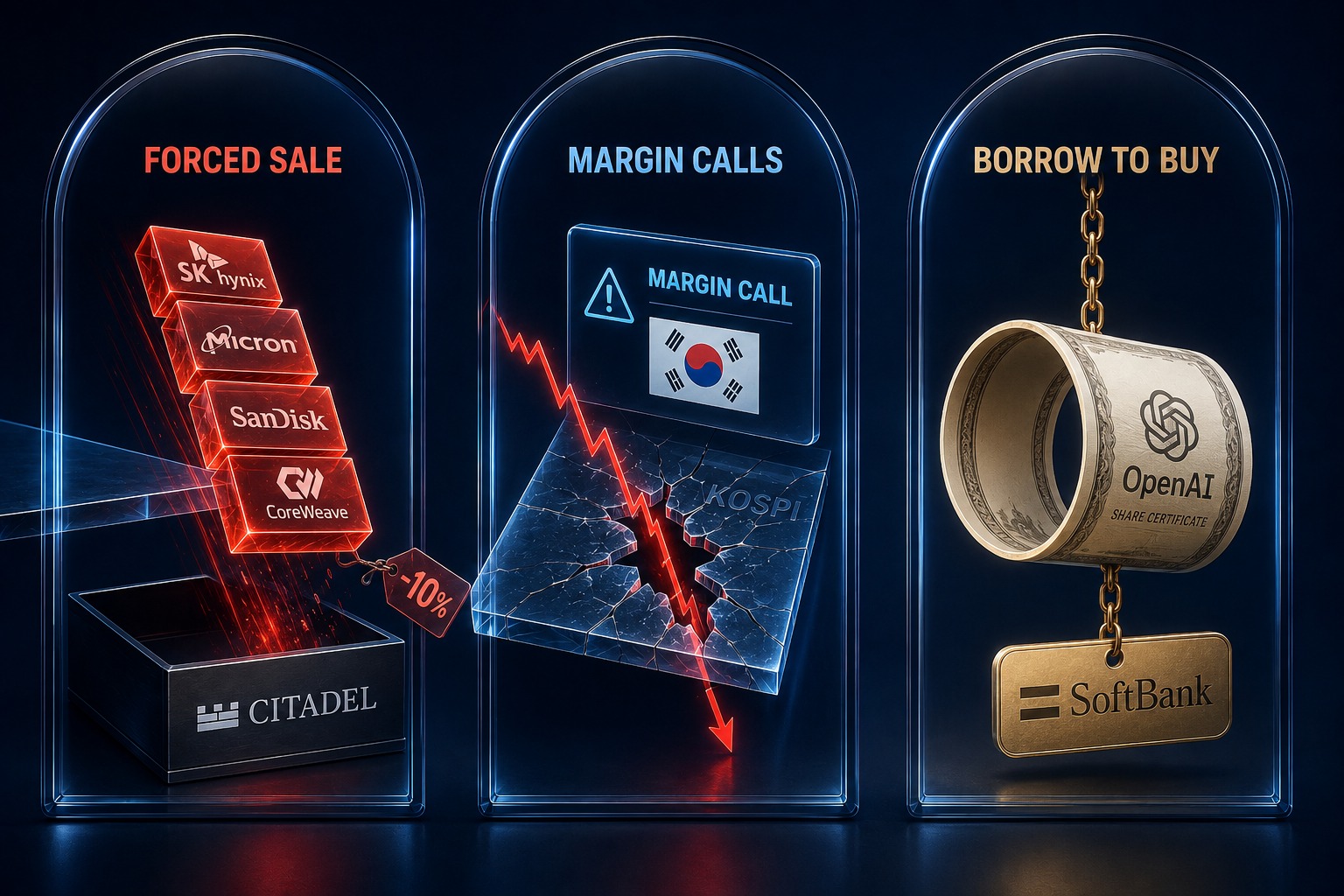
On July 27, the American markets show host Jim Cramer told viewers to stop buying AI stocks with borrowed money. He put it simply:
“If you’re on margin, get off it. [..] I no longer feel that you’ll get out alive.”
On margin means you borrowed to buy the shares. If they fall far enough, your broker could even sell them without asking.
Three days after Cramer’s statement, a hedge fund up 439% for the first half of the year was sold out exactly that way, its whole $16 billion portfolio bought by a rival overnight.
That same week, 1.2 million small investors in Seoul got the same demand. SoftBank borrowed $10 billion against its OpenAI shares.
Borrowed money had a loud week. We’ll get to the interesting bits.
But first, let’s see how the rest of the world held up this week.
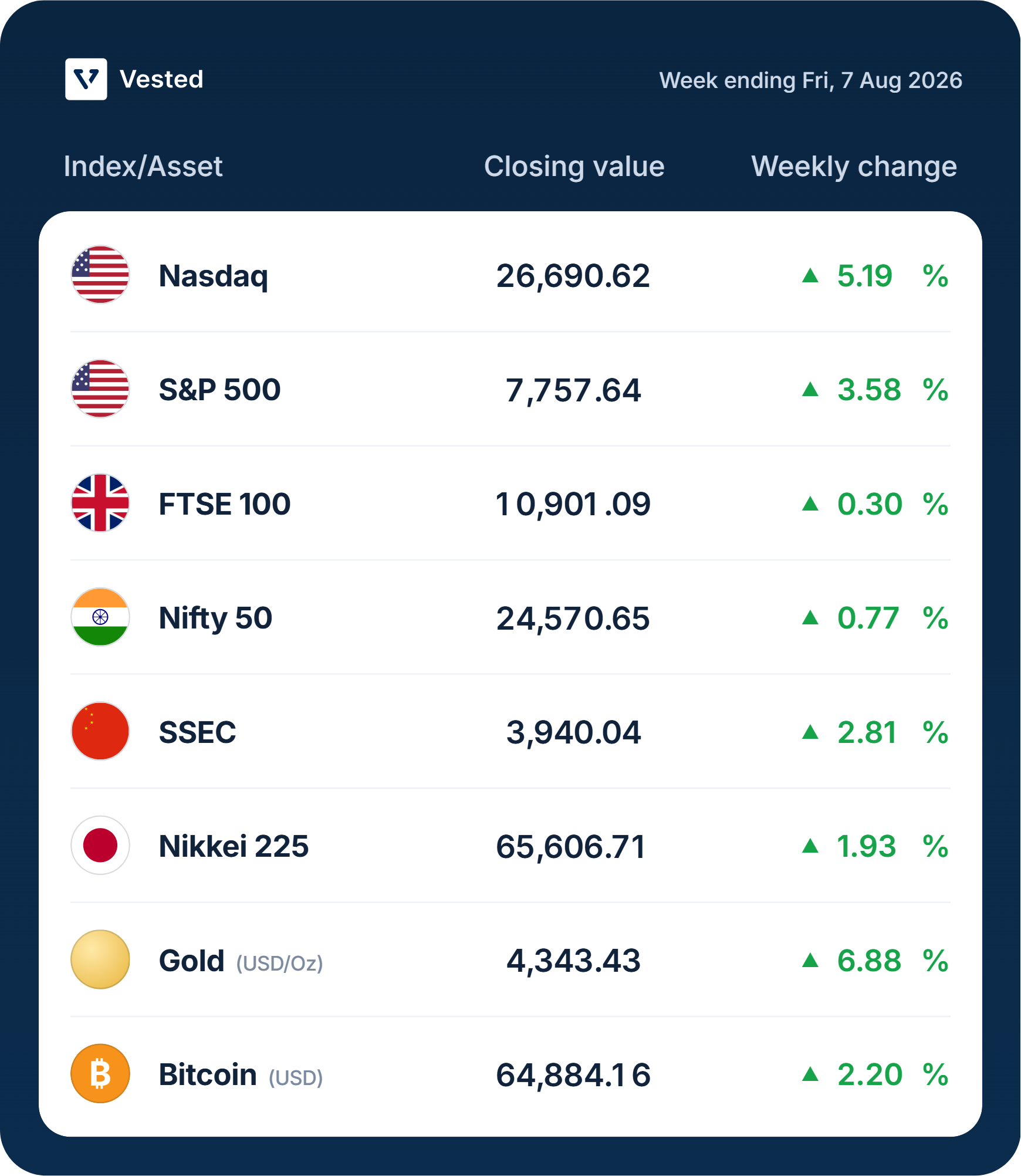
The World in a Week: How Major Markets Moved
United States: Markets went up on a bad jobs report. The US shed 23,000 jobs in July against expectations of 83,000 additions, with the previous two months revised down by a combined 103,000. Unemployment still fell to 4.1%, but only because 264,000 people left the labour force. Participation dropped to 61.4%, its lowest in more than five years.
Traders focused on one thing. The Fed’s next move was supposed to be a hike, and a shrinking payroll count makes that harder to justify. Odds of a September increase fell to about 42% from 55%.
That was enough. The S&P 500 closed Friday at a record and US stocks had their best week since mid-April, led by chip stocks. The Philadelphia Semiconductor Index rose 9.3% on the week after sliding more than 20% through July.
Asia: Shanghai led the region. Japan and India were quieter, both up modestly.
Gold hit a seven-week high in the same week, which does not fit a simple rate-relief story. Brent rose above $83 on Friday as Strait of Hormuz tensions flared again. US inflation data lands next week.
The tell of the week: a shrinking workforce made a weak jobs report look like good news.

News Stories
5x-bagger fund sold $16B stocks to rival overnight
On July 24, Leopold Aschenbrenner wrote to the investors in his hedge fund. He reported a 439% net return for the first half of the year, and added a postscript saying it seemed like a good time to put in more money.
“Situational Awareness” is the name of the fund he started in late 2024 after leaving OpenAI, named after a 165-page essay he had written about where AI was heading.
It bought the companies building AI hardware, and it bought them with borrowed money, reportedly as much as 4x. The long positions included SK Hynix, Micron, Nebius, SanDisk and CoreWeave. The short positions were in software companies.
Unfortunately, both sides went wrong at once.
SK Hynix fell almost 50% from its June peak, and the banks that had lent Situational Awareness the money asked for more collateral, meaning cash or assets pledged as security against the loan.
The fund did not have it, so something large had to be sold.
Citadel, another $71 billion hedge fund run by Ken Griffin, approached late on July 29 and negotiated overnight, outbidding rivals Millennium and Jane Street.
Before the opening bell, Citadel bought that pile of AI stocks, worth roughly $16 billion, for more than 10% less than the shares were trading at.
Situational Awareness ended July down about 67%, its assets falling from roughly $45 billion in early July to about $10 billion. Sounds more like –

Anyways, here is the part worth sitting with.
Over the four sessions that followed the sale, the Nasdaq 100 rose 9.3%. Citadel’s flagship Wellington fund had been up just 0.45% for July as of July 24. It closed the month up 5.9%, its best month since 2022.
Anyone who has watched a family sell gold in a hurry knows the price you get is not what the gold is worth. It is what someone will pay you today, because you cannot wait until tomorrow. The buyer on the other side of that counter is not smarter. They are just not in a rush.
Here is the detail that makes the point.
Even after losing 67% in a month, the fund is still up roughly 80% for the year. Aschenbrenner told investors it will stop borrowing from banks to boost its stock bets.
Leverage can actually jeopardize the very advantage it creates.
And the coming stories prove the point even further.
Leverage drove Korean investing activity
On June 19 the KOSPI, South Korea’s main stock index, hit an all-time high of 9,385.59.
By July 29 it closed at 5,663.24, about 40% below that peak, with roughly $2 trillion of market value gone in 40 days. The sessions of July 28 and 29 did most of the damage, wiping out 864.5 trillion won (“won” is South Korea’s currency) between them.
The reason was: concentration meeting borrowed money.
Samsung Electronics and SK Hynix together are more than half the index.
Korean retail investors had been buying both with margin loans and with leveraged ETFs, products that automatically buy more when prices rise and sell when they fall.
When prices fell, the “margin calls” started. A margin call is your broker telling you the shares you bought with borrowed money have dropped too far, and that you have a short window to put in more cash or they will sell your holdings for you.
Goldman Sachs estimated that by July 13, more than 1.2 million Korean accounts had received margin calls, with roughly 320,000 to 360,000 already sold out.
Margin loan balances had hit a record 38.63 trillion won on June 24.
Then, on July 31, the KOSPI rose 17.91%, its biggest one-day gain ever, after Microsoft’s overnight results beat expectations and calmed fears about AI spending.
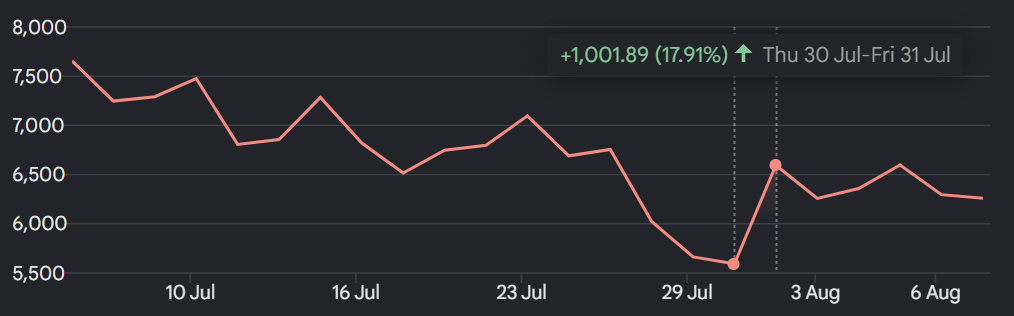
That day, foreign investors bought a net $5 billion of Korean shares. Korean retail investors sold a record $5.7 billion.
Here is what almost nobody is talking about.
Americans are borrowing against their shares at a record pace. FINRA, the US brokerage regulator, put total margin debt at $1.502 trillion in June, up 49% from a year earlier.
Mind you, it happened with US markets at or near record highs, not during a crash.
And like they say, nothing goes wrong while nothing goes wrong.
SoftBank used OpenAI shares to buy OpenAI shares
On August 5, alongside its June-quarter results, SoftBank disclosed that it had borrowed $10 billion, pledging its OpenAI shares as security. Goldman Sachs, JPMorgan, Apollo, Mizuho Securities and Sumitomo Mitsui all took part in the loan.
The money goes toward the final $10 billion of a $30 billion OpenAI investment it has to pay by October.
That will take SoftBank’s total spending on OpenAI to roughly $64.6 billion for about 13% of the company.
It has already sold its entire Nvidia stake for $5.83 billion and $12.73 billion of T-Mobile shares to fund earlier tranches, and took a $40 billion bridge loan in March 2026 that comes due in March 2027.
Anyways, here is the part worth understanding.
Nobody calls this a margin call, because the number has ten zeroes and the borrower wears a suit. But if the assessed value of the OpenAI stake drops far enough, SoftBank has to post cash or give up shares. That is technically what a margin call is.
There is one wrinkle.
OpenAI is not listed, so there is no daily price for the collateral.
The Wall Street Journal reported that banks are normally reluctant to make large loans backed by stock in private, loss-making companies, and that backers of big startups do not usually invest using debt at all.
It is like a gold loan where the jeweller’s valuation, not the day’s rate, decides whether you get the call.
Anyways, the part that matters for you more is this. Until recently, companies that had not listed yet, like OpenAI, were out of reach for retail investors.
That has changed.
Private companies like Reflection AI, which builds open-source AI models, and Figure AI, whose humanoid robots ran ten-hour shifts at a BMW plant, are now investable on Vested’s Private Markets.
Borrowing against shares hit records in both the US and Korea this year, and Japan’s biggest investor is doing the same, all with markets near highs.
Whoever lends you that money picks the day you sell, and it is rarely a good one.
So invest what you own, diversify well, and give it time.
Thanks for reading!
