





Welcome back to a new edition of Vested Shorts.
Lenin once put it simply:
“There are decades where nothing happens; and there are weeks where decades happen.”
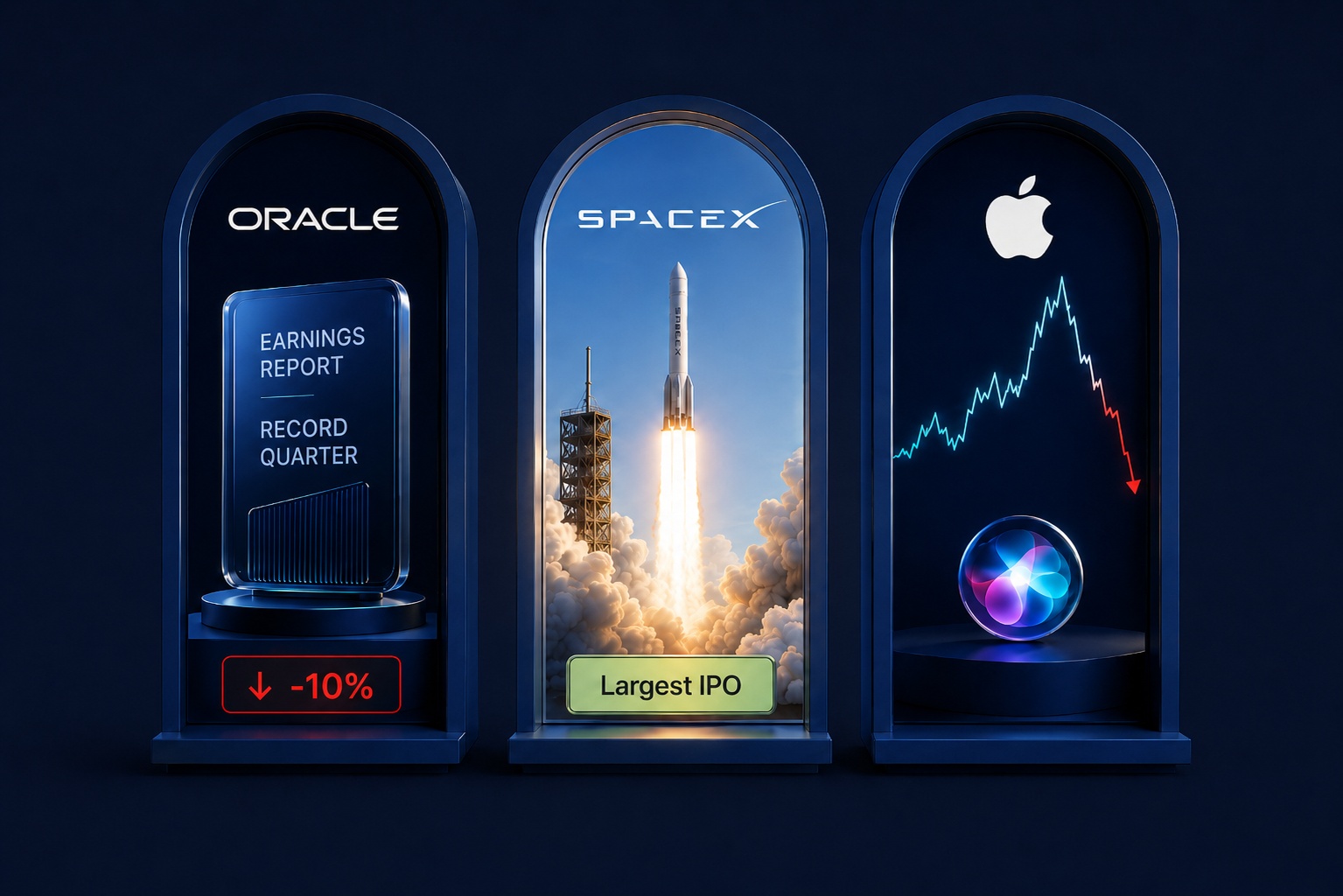
SpaceX pulled off the biggest IPO in stock market history, during a selloff. Oracle had a flawless quarter on every metric and fell 10% for it. Apple hit an all-time high and gave it all back the same day.
Good week for headlines. Rough week for anyone holding those stocks.
The indices barely moved through all of it. What did move, is the story of this week.
Before we get to that, we have an exciting update for you.
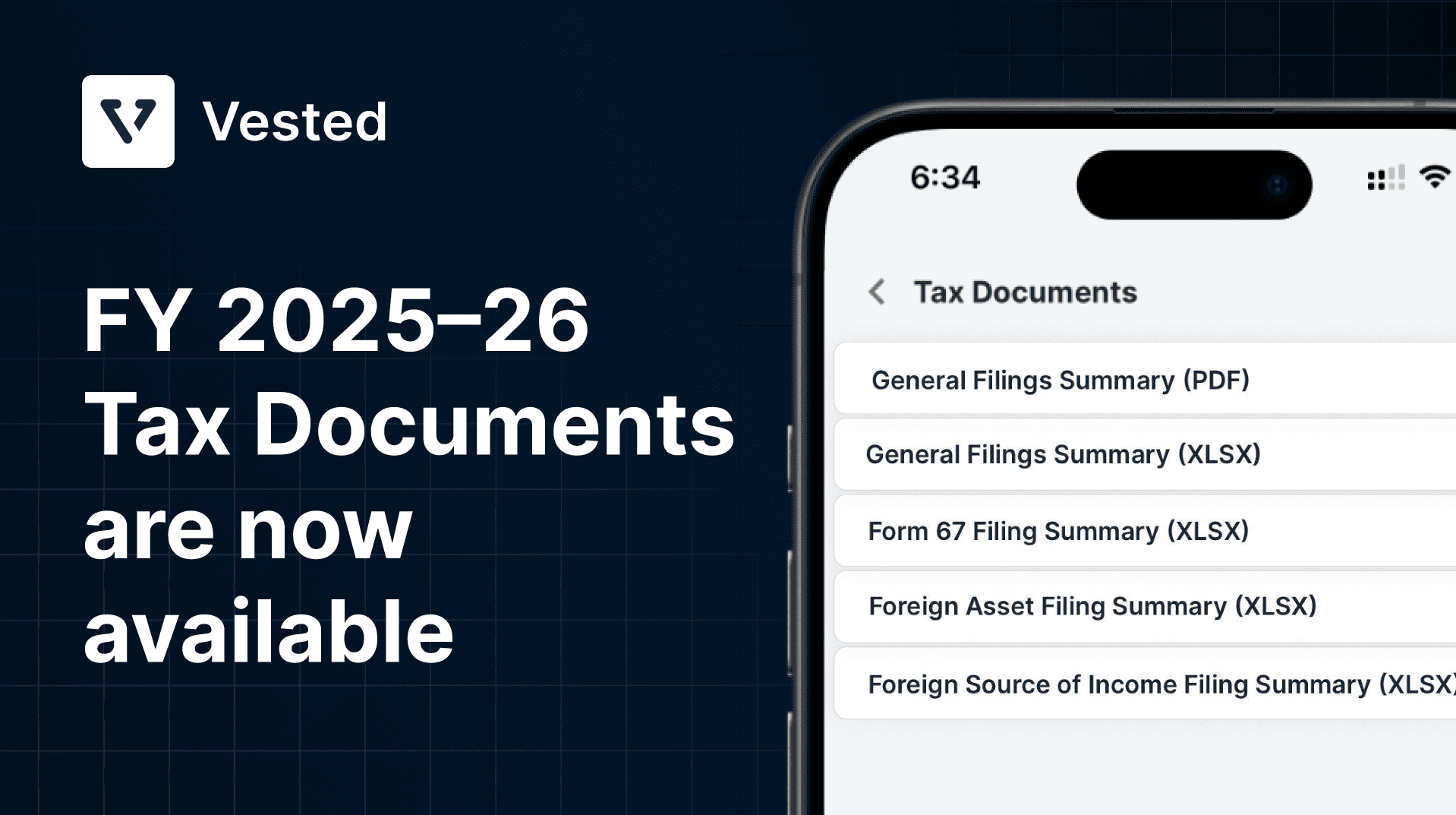
Your FY 2025-26 tax documents are now live on Vested! Get all tax documents for your entire Vested portfolio: Stocks, ETFs, Global Funds, Managed Portfolios and Private Markets, all in one place.
You can also file your ITR directly from Vested with ClearTax and enjoy an exclusive offer of up to 70% off using code CTVESTED.
Just go to your Profile. Then click on Tax Documents.
Now, back to the markets.
The World in a Week: How Major Markets Moved
This week, the market got pulled in two directions and ended up roughly where it started.
A hot inflation reading and renewed Iran tensions pushed markets lower mid-week. Then Washington called off planned strikes, signalled a deal was close, and oil fell back.
Worth noting: that bounce was driven by geopolitics, not by the inflation problem going away. Wednesday’s inflation data still stands. The Fed meets next week with rate hikes back on the table rather than cuts.
The week was also uneven underneath. US gains were concentrated in a few large AI names. Europe was carried by banks and miners. And India stayed pressured by foreign selling and the oil price.

News Summaries
Welcome the Most Valuable Space Company on Earth
SpaceX priced its IPO at $135 per share on Thursday, June 11, and started trading on the Nasdaq on Friday under the ticker SPCX at a $1.77 trillion valuation, having raised roughly $75 billion across 556 million shares.
The largest IPO in stock market history. By some distance.
Musk had always preferred to keep SpaceX private. Reportedly, Starlink’s growth trajectory was the specific catalyst that changed his mind.


Two things matter more than the opening price.
First, the retail angle: Musk pushed for up to 30% of shares to go to retail investors, at least three times the standard 5 to 10% allocation. Retail’s response: more than $100 billion in orders.
Second, the timing effect: part of this week’s equity selling was attributed to investors raising cash ahead of the listing. Index funds also face forced SPCX buying in July under Nasdaq’s revised inclusion rules. The IPO’s market impact extends well past day one.
On valuation, the debate is real. Morningstar calls the company significantly overvalued at the offer price. The historical record shows IPOs averaging a 23.6% first-day gain, but only 10.6% over three years. The bulls counter that Starlink’s growth is exactly what changed Musk’s long-held preference for staying private.
Anyways, here is the part worth sitting with.
The first-day price is the wrong number to track.
Think of it like the opening weekend collection of a Bollywood blockbuster. Friday’s box office tells you about the marketing and the hype. The four-week total tells you whether the film had legs. SpaceX’s day-one price is the Friday number. The three-year return is the four-week total.
What actually changed this week is the access question.
The India-lens: Every prior leg of SpaceX’s value creation happened in private rounds Indian investors could not touch. From Thursday, that constraint is gone. The three-year IPO underperformance data argues for position sizing over enthusiasm rather than an all-in day-one bet. SPCX is available on Vested from its first trading day, with fractional shares letting you build exposure gradually rather than chasing the open.
You can invest in SpaceX (SPCX) and 10,000+ US stocks directly from India through Vested.
Invest in US Stocks
Oracle’s Record Quarter Fails to Impress
This was the week’s most instructive earnings reaction, because the quarter itself was excellent.
Oracle’s adjusted EPS of $2.03 beat the $1.96 consensus. Revenue of $19.18 billion rose 21% year over year.
The stock fell 10% after hours.
Markets be like –

The market’s objection was not the results. It was the funding path.
Capex nearly tripled to $55.7 billion for the year. Free cash flow finished at negative $23.7 billion. Oracle had already raised $43 billion in debt and $5 billion in equity this fiscal year. And now plans roughly $40 billion more in fiscal 2027, with net capex guided to about $70 billion.
The bull case rests on contracted demand. Remaining performance obligations hit $638 billion, up 363% year over year. Customer prepayments of $75 billion and customer-supplied hardware reduce the capital Oracle itself must raise.
The asterisk: Bank of America estimates over half of that backlog comes from a single, still-unprofitable counterparty. OpenAI.
The stock is now down over 40% from its September 2025 high. Which makes Oracle the market’s cleanest live referendum on whether AI infrastructure spending is an investment or an obligation.
The India-lens: Most Indian investors in US tech buy the names they recognise. But this week showed that within AI, not all names are built the same. Some benefit from AI adoption without spending much. Others need the credit market to cooperate just to deliver what they have already promised. In a rising-rate environment, those two groups are being priced very differently. Vested’s Managed Portfolios spread exposure across that divide rather than concentrating in either camp.
Invest in Managed Portfolios
Apple Fails to Walk the Talk. Again.
Apple’s WWDC keynote ran on June 8. The stock touched an all-time intraday high of $317.40 while Tim Cook was still on stage, then reversed to close down 1.89% at $301.54. Analysts broadly raised price targets during the keynote. It looked like a clean win.
Then came the fine print. The selloff that followed was about execution risk, not fundamentals.
Siri AI ships as a beta later this year, with no committed launch date for a feature that has already been delayed multiple times since 2024. At launch, it will not be available in the EU or China, and the addressable base for the initial rollout weakens further.
By June 10, the stock had drifted to roughly $290, a loss of approximately $25 per share from the intraday high in roughly 48 hours.

The fundamentals behind the stock are untouched. Quarterly revenue was $111.2 billion. Services hit a record $31 billion. Analysts broadly raised price targets.
And September brings a significant catalyst. John Ternus takes over as CEO on September 1, with his first keynote expected to feature the first foldable iPhone.
Here is what almost nobody is talking about.
The stock is not being repriced on last quarter. It is being repriced on a question that has now been asked twice without a clear answer:
When does Siri AI actually ship as a product rather than a promise?
Think of it like a cricket team with an excellent batting lineup being valued on the assumption that a world-class pace bowler would be ready by March. March came and went. Then March came again. The batting lineup is still excellent. Revenue of $111.2 billion is not a small thing. But the valuation included the bowler.
September is the event the market is actually watching, not June. John Ternus’s first keynote as CEO will determine whether this week’s pullback ages well or marks the start of a genuine re-rating.
The India-lens: For Indian investors holding AAPL, the question is simple: is this 8% drop worth panicking about, or is it just the market overreacting to a delayed feature? Fundamentals have not changed. Historically, post-event Apple selloffs have been noise rather than the start of a deeper fall. September’s catalyst is still ahead.
If you want to understand how Apple built itself into a $4 trillion ecosystem that one delayed Siri feature cannot break, we made a video on exactly that in Global Markets by Vested.
Watch on YouTube
And if you are new to investing in US stocks and want to understand how to think about companies like Apple before acting on a dip, we have exactly what you need at GlobEd by Vested.
Now step back and look at all three together.
SpaceX raised $75 billion mid-selloff and got $100 billion in retail orders. Oracle had its best quarter on record and fell 10% for it. Apple hit an all-time high and gave it back the same day.
All three had good news. None of them ended the week well.
What the market used to reward was great numbers. What it is asking now is simpler and harder:
Can you actually afford what you have promised to build?
That question lands at the Fed meeting next week. Let’s see.
